
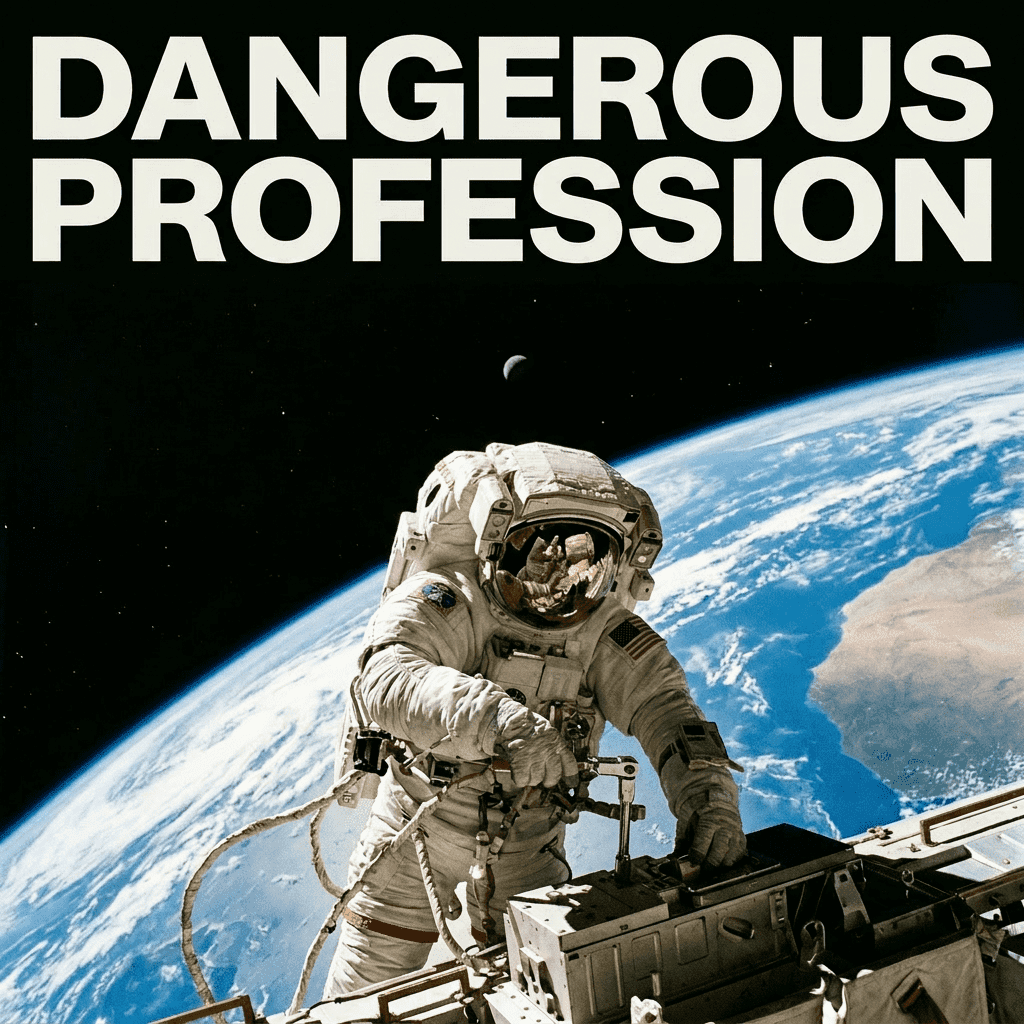
Space flight hazards will change everything you think you know about leaving our cozy planet.
Commander Elena Vance stared into the infinite black void of the cosmos, her hands trembling as the metal hull of the Odyssey groaned under the weight of a silent, invisible killer. Only three days into her mission to Mars, her bones were already leaching calcium like an old chalk stick, her heart was shrinking, and a rogue solar flare was about to paint the ship in a lethal wash of cosmic radiation. She looked at her co-pilot, Leo, whose eyes mirrored her own stark terror—they weren’t just exploring a new frontier; they were trapped in a beautifully lit cosmic execution chamber.
So, how is traveling in space dangerous? Let’s strap in and explore the terrifying, mind-melting realities of why space flight hazards are the ultimate test of human survival.
Is the void actively trying to destroy your body?
Absolutely, and it starts with your bones! The human body evolved to fight Earth’s gravity every single day, but the moment you enter microgravity, your body decides it doesn’t need that heavy skeleton anymore. According to comprehensive medical research published by NASA’s Human Research Program, astronauts lose up to 1% to 1.5% of their bone mineral density for every single month spent in space.
But wait, the fun doesn’t stop at brittle bones. Because your blood no longer pools in your legs, it rushes to your head, giving you a puffy face and a perpetually stuffed nose. Your heart, realizing it doesn’t have to pump fluid uphill anymore, actually begins to shrink and decondition. When you finally return to a planet, your cardiovascular system forgets how to handle gravity, causing severe dizziness and fainting known as orthostatic hypotension.
Are cosmic rays a literal sci-fi nightmare?
Forget the Fantastic Four; real cosmic radiation won’t give you superpowers—it will scramble your DNA. Deep space is flooded with Galactic Cosmic Rays (GCRs) and Solar Particle Events (SPEs). On Earth, our thick atmosphere and magnetic field act as a giant bulletproof vest, shielding us from this subatomic artillery. In a tin can hurtling toward Mars, you are completely exposed. Scientific consensus detailed by the National Center for Biotechnology Information confirms that chronic exposure to these high-energy, heavy ions dramatically increases an astronaut’s lifelong risk of developing aggressive cancers, cataracts, central nervous system damage, and severe heart diseases. Standard aluminum spacecraft shielding can stop minor solar particles, but those fast-moving cosmic rays slice right through metal hulls and human cells alike.
Can a single paint chip blow up a spaceship?
Yes, because humanity has turned Earth’s lower orbit into the world’s fastest, deadliest trash dump. Right now, there are millions of pieces of “space junk”—including dead communication satellites, frozen coolant, and discarded rocket boosters—hurtling around our planet.
How fast are they moving? Try 17,500 miles per hour (about 28,000 km/h). At that blistering velocity, a tiny fleck of stray paint packs the kinetic energy of a speeding bullet, and a stray bolt can deliver the explosive power of a hand grenade. Space agencies are currently tracking tens of thousands of large debris pieces, but as the European Space Agency warns, a catastrophic chain reaction called the Kessler Syndrome could soon trigger a domino effect of collisions, completely trapping us on Earth under an impenetrable cloud of shrapnel.
Will the silence of space break your mind?
Living in space is the ultimate test of psychological endurance. Imagine being locked in a noisy, cramped metal tube with the same three people for three straight years, with no fresh air, no hot showers, and a twenty-minute communication delay back to Earth.
The isolation is psychological warfare. NASA’s ongoing behavioral health studies track how confinement disrupts circadian rhythms, causes severe sleep deprivation, and strains interpersonal relationships. If an emergency happens out past the Moon, there is no calling 911, and no quick turnaround rescue mission. You are entirely, terrifyingly on your own.
Space flight hazards turn every second of exploration into a high-stakes gamble against physics, biology, and the sheer hostility of an unforgiving vacuum. We will keep reaching for the stars, but we must never forget that the cosmos does not welcome us with open arms—it forces us to fight for every breath.
