
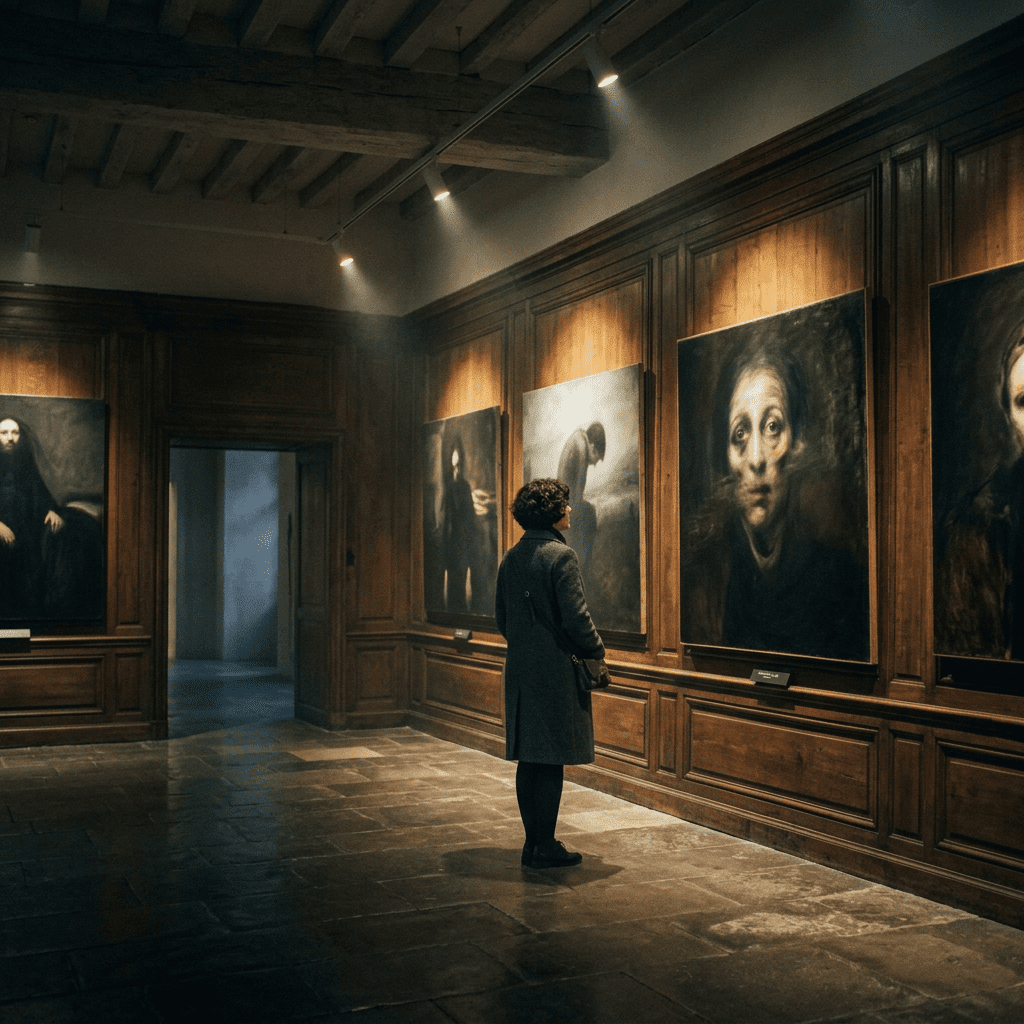
You can visit all the modern, minimalist galleries you want, but if you want to experience raw, unfiltered creative power that has shaped empires, you need to book a flight to Madrid immediately. Standing proudly in the heart of Spain’s capital is the Museo del Prado, a breathtaking, palatial fortress of fine art that doesn’t just exhibit history—it practically bleeds it.
Forget boring, quiet museums where people whisper in front of dusty canvases. The Prado is a high-octane visual arena packed with royal scandals, dark psychological masterpieces, and paintings so intensely revolutionary they regularly caused political riots and monarchical meltdowns.
Here is your detailed, high-utility blueprint to navigating Spain’s premier cultural jewel, featuring a dramatic wartime rescue story that proves why this museum is the literal soul of a nation.
How Did a Midnight Convoy Save Europe’s Greatest Masterpieces From Absolute Destruction?
To fully comprehend why the world treasures this specific collection, we have to travel back to a terrifying, smoke-filled autumn night in November 1936. Imagine the grand galleries of the Prado shaking violently as artillery shells explode across Madrid during the height of the Spanish Civil War. Fascist bombers are circling above, and a direct hit to the roof has already sent incendiary bombs crashing into the central galleries. The world’s finest collection of Velázquez, Goya, and Titian is seconds away from being reduced to a pile of ash.
Suddenly, a rogue committee of artists, militia members, and museum curators decided to execute a high-stakes, midnight evacuation plan. Instead of leaving the art to fate, they frantically tore the priceless canvases from their heavy gilded frames, carefully wrapped them in mattress padding, and packed them into a fleet of rickety wooden trucks.
The night air was a chaotic whirlwind of sniper fire and blinding explosions! Consequently, the convoy rolled out of Madrid under the cover of darkness, navigating bombed-out roads while heading east toward Valencia. Over the next three years, these masterpieces were hunted across Europe, hidden in damp castles and mountain tunnels, and eventually smuggled across the Swiss border to safety in Geneva.
This dramatic wartime rescue proved exactly why the Prado is completely untouchable—the people of Spain risked their lives to protect these canvases because they knew that if the art died, the very identity of their nation would vanish forever. As a result of that heroic midnight exodus, every single masterpiece returned home completely unscathed in 1939.
What Absolute Masterpieces Must You Run To See First?
Moving forward from that wartime adrenaline rush, let’s look at the actual, hard-hitting checklist of what you need to see when you step inside. With over 8,000 paintings in its catalog, trying to see everything in one day is a certified recipe for museum fatigue. To conquer the Prado like an absolute boss, you must prioritize these three legendary heavy hitters.
1. “Las Meninas” by Diego Velázquez (The Original 3D Mind-Bender)
- The Vibe: This isn’t just a painting; it is a massive, life-sized optical illusion that completely shatters the fourth wall.
- The Detail: Painted in 1656, it shows the young Spanish Infanta Margaret Theresa surrounded by her entourage, but Velázquez cleverly paints himself into the left side of the canvas, staring directly at you. Look closely at the mirror in the background—it reflects the King and Queen of Spain, meaning you are standing exactly where the royalty stood. It is a brilliant masterclass in perspective that has obsessed artists like Picasso and Dalí for centuries.
2. “The Garden of Earthly Delights” by Hieronymus Bosch (The Medieval Acid Trip)
- The Vibe: A triptych so wildly chaotic, surreal, and terrifying it looks like it was painted by a sci-fi concept artist rather than a 15th-century Dutch master.
- The Detail: Split into three massive panels, it tracks humanity from the peaceful Garden of Eden, through a wild, hedonistic paradise filled with giant strawberries and mythical beasts, and drops you directly into a horrific, apocalyptic nightmare of hell. You can stand in front of this masterpiece for an hour and still find new, bizarre details hidden in the brushstrokes.
3. “The Third of May 1808” by Francisco de Goya (The Ultimate Anti-War Scream)
- The Core: The world’s very first truly modern political protest painting.
- The Detail: Goya captures the brutal reality of French soldiers executing Spanish freedom fighters in Madrid. The central figure, dressed in a blinding white shirt with his arms raised like a martyr, anchors the entire room with pure, raw emotional agony. It is fierce, heavy, and utterly unforgettable.
How Can You Hack the Prado to Avoid the Massive Tourist Crowds?
In addition to knowing what to see, executing a smart, tactical entry strategy is critical to keeping your day fun and stress-free. Furthermore, ignoring these practical details can leave you stuck in a two-hour ticket line under the blazing Madrid sun.
- The Golden Free Hours Hack: Did you know the Prado opens its doors completely for free from Monday to Saturday between 6:00 PM and 8:00 PM (and Sundays from 5:00 PM to 7:00 PM)? While this is incredible for budget travelers, the lines form an hour early and the galleries become packed. If you want a peaceful viewing experience, skip the free hours and buy an early morning ticket instead.
- Book the “9:45 AM” Slot Online: Always buy your tickets directly from the official museum website weeks in advance. Secure the very first morning slot, enter through the Puerta de Jerónimos, and head straight to the Velázquez rooms on the first floor before the tour buses arrive. You will have Europe’s greatest masterpieces completely to yourself for a solid twenty minutes.
- Grab the Free Map Immediately: The Prado’s layout is a sprawling, multi-level maze of interconnected pavilions. Grab the physical floor plan at the information desk—it clearly highlights the top 50 absolute must-see masterpieces so you don’t accidentally wander into a hallway of minor portraits when you should be looking at Goya.
Why Is Goya’s “Black Paintings” Room the Most Intense Experience in Madrid?
Ultimately, mixing historic curation with raw psychological horror is what makes the Prado a deeply immersive emotional ride. To end your pilgrimage with a massive jolt of adrenaline, you must head down to the ground floor and step into the dim room housing Goya’s infamous Black Paintings.
- The Madness of a Genius: Late in his life, deaf, illness-stricken, and disillusioned by the horrors of war, Goya locked himself away in a country house called Quinta del Sordo (The Villa of the Deaf Man). He bypassed traditional canvas entirely and painted fourteen terrifying, dark, monstrous murals directly onto the plaster walls of his dining room and salon.
- The Horror on Display: These paintings—including the legendary, stomach-churning Saturn Devouring His Son—were never meant to be seen by the public. They are raw, visceral snapshots of a brilliant mind descending into madness and despair. When the museum safely transferred these murals to canvas years later, it unlocked a haunting, heavy room that leaves every visitor entirely speechless.
Final Thoughts: Are You Ready to Stand Among the Titans?
In short, the Museo del Prado isn’t just a checklist item to pass the time on vacation; it is a roaring, high-energy monument to the absolute limits of human imagination. So, pack your most comfortable walking shoes, leave your pretentious art expectations at the door, and get ready to let these masterworks completely blow your mind. Walk through those grand palace doors, look the Old Masters dead in the eye, and own your cultural adventure—because true luxury means experiencing art that shook the world.
