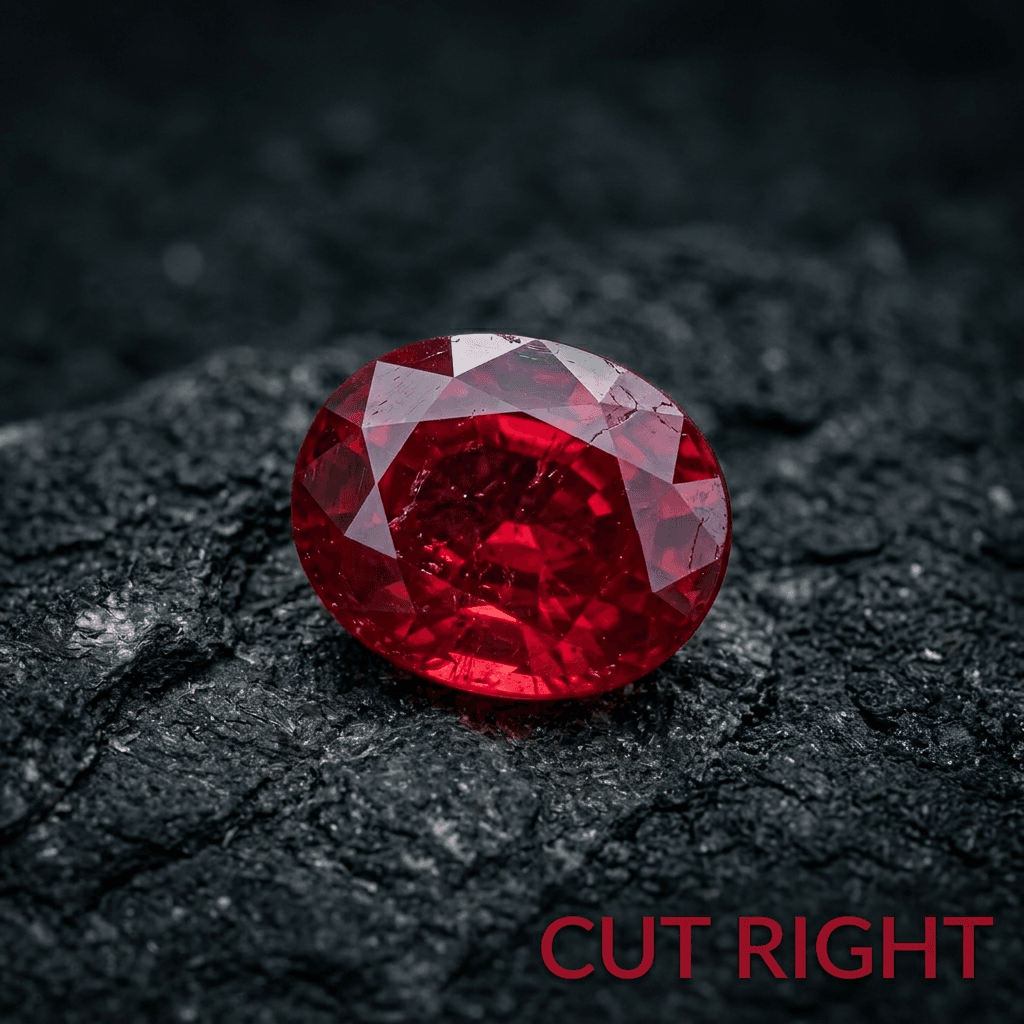
The glowing hue of an untreated tanzanite or a fiery pigeon-blood ruby might sweep you off your feet initially, but without the precise physics of an expert artisan’s wheel, that expensive rock will look exactly like a piece of dull, muddy glass. Welcome to the sparkling kingdom of the gemstone cut, where microscopic geometric angles dictate whether a raw mineral transforms into an elite luxury item or remains a tragic, lifeless pebble. While color gives a gemstone its unique personality, it is the technical cutting style that breathes actual life, fire, and unhinged brilliance into the stone. Let us unlock the high-stakes secrets of lapidary art to see why a bad cut will instantly ruin even the most flawless saturation on Earth.
Who Stole the Sparkle From the Royal Crimson Tourmaline?
The rain hammered against the floor-to-ceiling windows of the Parisian penthouse as Julian stared down at the velvet box, his chest tightening with absolute dread. Inside sat the legendary Crimson Fire, an exceptionally rare 15-carat rubellite tourmaline meant to seal a historic multi-million-dollar auction deal by midnight. Yet, under the gallery spotlights, the center of the stone was completely dead—a dark, hollow, lifeless void known in the trade as a “window” stared back at him. His lead lapidary artist had prioritized keeping the raw carat weight high instead of aligning the facets to the stone’s critical refractive index. Julian knew the buyer, a notorious billionaire gem connoisseur, would see right through this superficial optical illusion and cancel the entire acquisition. With only three hours left, Julian sprinted down the cobblestone streets to a hidden basement workshop, desperate for an emergency recut to save his career and his legacy.
Why Does a Bad Cutting Style Ghost Your Bright Colors?
A gemstone cut is not just about choosing a cool shape; it is an exact mathematical science that traps and bounces light directly back into your eyes. Every single mineral family has a specific refractive index that dictates how light bends when entering the stone. If a lapidary artist cuts the bottom facets (the pavilion) too shallow or too deep, the light leaks out of the bottom or sides instead of bouncing back to the viewer. This disastrous phenomenon creates a “window,” making the center of the gemstone look entirely transparent, pale, and completely washed out. No matter how deep or vibrant the original color of the rough mineral is, a poorly angled cut will make the final piece look cheap, uneven, and utterly disappointing to any collector.
How Do Brilliants and Step Cuts Change the Visual Vibe?
- Brilliant Cuts: These feature triangular and kite-shaped facets arranged to maximize wild, dazzling sparkle and hide internal inclusions.
- Step Cuts: These utilize long, parallel rectangular facets that emphasize clean clarity and deep, velvety pools of color.
- Mixed Cuts: These combine a step-cut crown with a brilliant pavilion to deliver the absolute best of both optical worlds.
Is the Elusive Emerald Cut Worth the Ultimate Risk?
Step cuts, like the world-famous emerald cut, act like a crystal-clear mirror into the very soul of your gemstone cut. Because these wide, open facets do not create a chaotic storm of sparkle, they completely expose the true saturation of the mineral while leaving absolutely nowhere for internal flaws or uneven color zoning to hide. This is why magnificent green emeralds or premium blue sapphires require an impeccable, symmetrical cut to let their true hue shine without looking patchy. If you want to view a brilliant showcase of masterful step cutting on world-class specimens, explore the historic collections curated by the Smithsonian National Museum of Natural History, which displays some of the most precisely faceted minerals in human history.
Can the Right Facets Magically Rescue a Pale Stone?
Expert lapidaries can actually manipulate light to make a light-colored stone look incredibly deep and highly saturated. By utilizing a deep pavilion and adding extra facets to a brilliant or radiant style, the light is forced to bounce around inside the mineral multiple times before exiting. This clever optical journey tricks the human eye into perceiving a much richer, darker, and more luxurious color than the raw material originally possessed. Ultimately, color may draw you in from across the room, but it is the meticulous genius of the cutting style that keeps you completely mesmerized forever.
