
The cold steel of a pistol pressed against Elena’s ribs as the Parisian rain slicked the cobblestones outside the dim café. “Give me the Pigeon’s Blood ruby, Elena, or your career ends tonight,” whispered Marcus, his breath smelling faintly of expensive espresso and betrayal. Elena smiled, her fingers tightly squeezing the leather folder inside her trench coat. “You can take the ruby, Marcus,” she purred, stepping backward into the shadows, “but without the official laboratory report in this folder, the market won’t pay you a single dime for it.” Marcus froze, realizing too late that in the high-stakes world of elite jewel collections, the paper is worth just as much as the stone.
When you step into a jewelry boutique or an international auction house, you are not just purchasing a sparkling piece of history. You are investing your hard-earned wealth into an asset that requires absolute legal and scientific validation. To protect your investment, you must know exactly what to get in writing: the essential documents to ask for when buying gems. Without the proper paper trail, your prized sapphire could easily turn out to be cheap glass, or a heavily treated stone worth only a fraction of its sticker price. Let’s look closely at the essential documents you must secure before any money changes hands.
Why Is an Independent Laboratory Report Your Ultimate Shield?
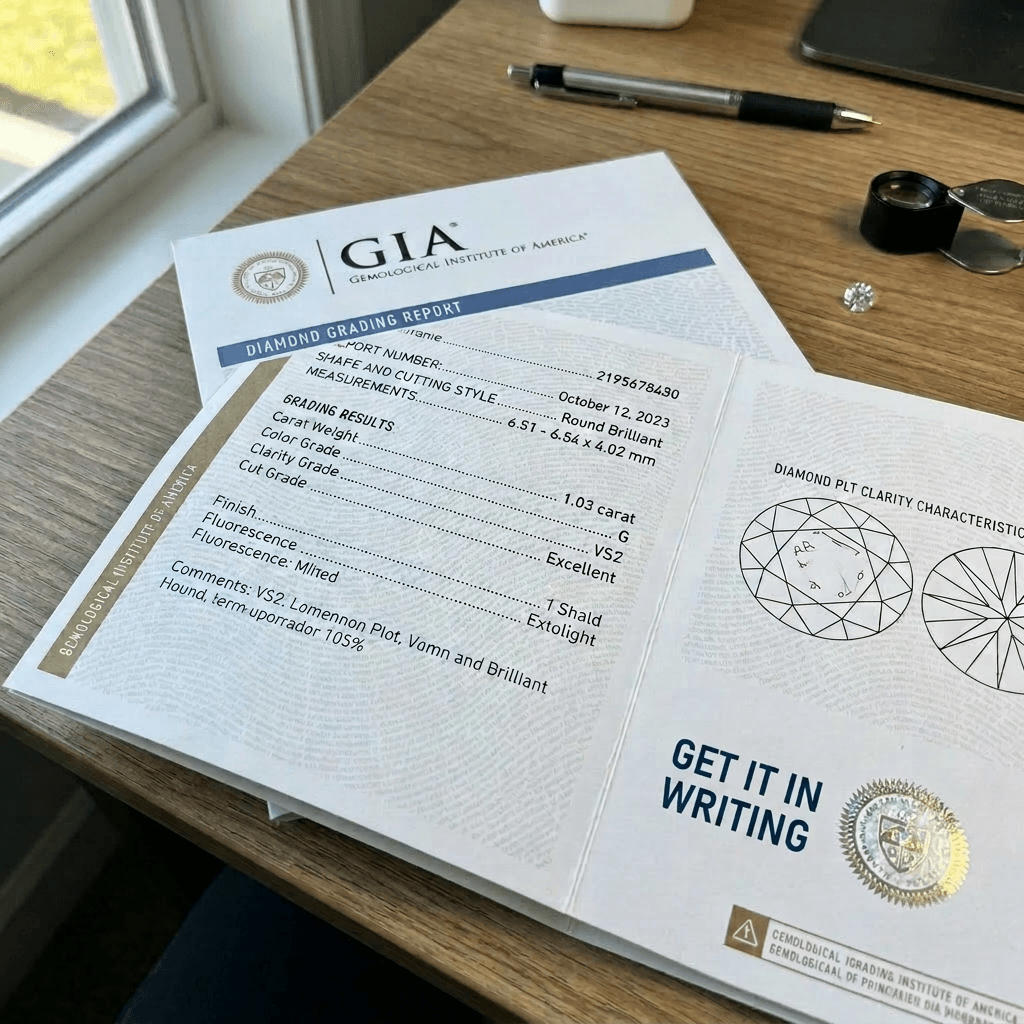
An independent laboratory report is the single most important document you can request when purchasing high-value gemstones. This document must come from a recognized, neutral gemological authority such as the Gemological Institute of America (GIA) or the GemResearch Swisslab (GRS). A true laboratory report provides an unbiased, scientific analysis of the stone’s physical characteristics.
A complete, top-tier laboratory report from an independent facility will explicitly verify:
- The Exact Mineral Species: It officially distinguishes a natural, mined gemstone from a synthetic, lab-grown counterpart.
- The Treatment and Enhancement Status: It discloses whether the stone has undergone color or clarity alterations, including fracture-filling, beryllium diffusion, or extreme heat treatments.
- The Carat Weight and Dimensions: Precise measurements are tracked down to the hundredth of a millimeter to ensure the stone matches the document perfectly.
- The Geographic Origin: For premium rubies, emeralds, and sapphires, a documented origin from storied locations like Kashmir or Myanmar drastically elevates market value.
What Specific Details Must Be Explicitly Stated on the Invoice?
Never accept a generic, handwritten receipt that merely lists “blue ring” or “red stone” as your proof of purchase. Your financial invoice or bill of sale is a binding legal contract that protects you from consumer fraud. The Federal Trade Commission (FTC) enforces strict rules regarding gemstone disclosures, meaning a seller is legally obligated to put verbal promises into writing.
When examining your final sales invoice, confirm that the jeweler has clearly written:
- The Full Verbal Description: Every claim made during the sales pitch must be typed out, including color grades, clarity levels, and the specific stone type.
- A Explicit Disclosure of Treatments: The invoice must state if a gem is natural, untreated, or enhanced by specific industry methods.
- The Precious Metal Purity: If the gemstone is mounted, the invoice must detail the exact metal type and hallmark verification, such as 18K gold or Platinum 950.
- The Return and Refund Policy: The exact duration of your inspection window and the specific terms for a full cash refund must be detailed in plain ink.
How Does a Retail Appraisal Protect Your Insurance Policy?
While a lab report identifies the physical nature of a gemstone, a professional retail appraisal assigns a specific monetary value to the item. You will need this document immediately to secure accurate jewelry insurance coverage against theft, loss, or damage. A valid appraisal ensures your insurance provider will payout an amount that reflects the true, current market cost to replace the exact piece.
A pristine, legally compliant retail appraisal must feature:
- The Appraiser’s Credentials: The document should display a certified gemologist credential from an organization like the American Gem Society (AGS).
- The Current Market Valuation: A clear statement of the retail replacement value, explicitly excluding tax or speculative future inflation.
- High-Resolution Photography: Multi-angle macro photographs that clearly show the stone’s setting, unique inclusions, and design hallmarks for undeniable identification.
What Red Flags Tell You to Instantly Walk Away From a Deal?
Awareness of documentation fraud is your best defense against losing thousands of dollars to unscrupulous dealers. If a seller hesitates to provide paperwork, or offers excuses about why a report cannot be generated, grab your belongings and exit the premises immediately.
Be on high alert for these critical document red flags:
- The In-House Certificate: A document printed directly on the store’s own letterhead claiming a stone is authentic carries zero independent legal weight.
- The “Laminated Card” Trick: Cheap, generic plastic cards displaying generic text without a verifiable, online database tracking number are frequently fake.
- Mismatched Carat Weights: If the carat weight listed on a lab report varies even slightly from the actual weight of the stone on a digital scale, the report belongs to a completely different gem.
Always remember the lesson Elena taught Marcus in the rainy streets of Paris: a spectacular gemstone is only as valuable as the verified paperwork protecting it. Demand your independent laboratory report, double-check your itemized invoice, secure your retail appraisal, and enjoy your brilliant new investment with complete peace of mind.
