
You can walk through all the quiet, pristine galleries or stuffy contemporary museums you want, but the most electric cultural battles aren’t happening inside velvet ropes. The true, high-octane revolution is exploding directly onto our concrete pavements. We are talking about Street Art & Graffiti: Vandalism vs. respected public art forms. Far from being a simple, unified subculture, the global urban art landscape is locked in a fierce, high-stakes identity crisis that divides city councils, property owners, and millionaire collectors down the middle.
Forget about basic, single-toned definitions. Navigating the legal and aesthetic gray zones of Street Art & Graffiti: Vandalism vs. respected public art forms is an elite power move that completely reshapes how you read the modern cityscape. While municipal crews spend nearly $12 billion annually trying to wash signatures off brickwork, the international art market is actively auctioning off those exact same underground textures for millions of dollars.
Here is your detailed, high-utility blueprint to decoding the world’s most controversial creative battleground, featuring a dramatic auction-room story that permanently shattered the rules of modern luxury curation.
How Did a Shredded $1.4 Million Frame Permanently Hijack the Global Elite Art Grid?
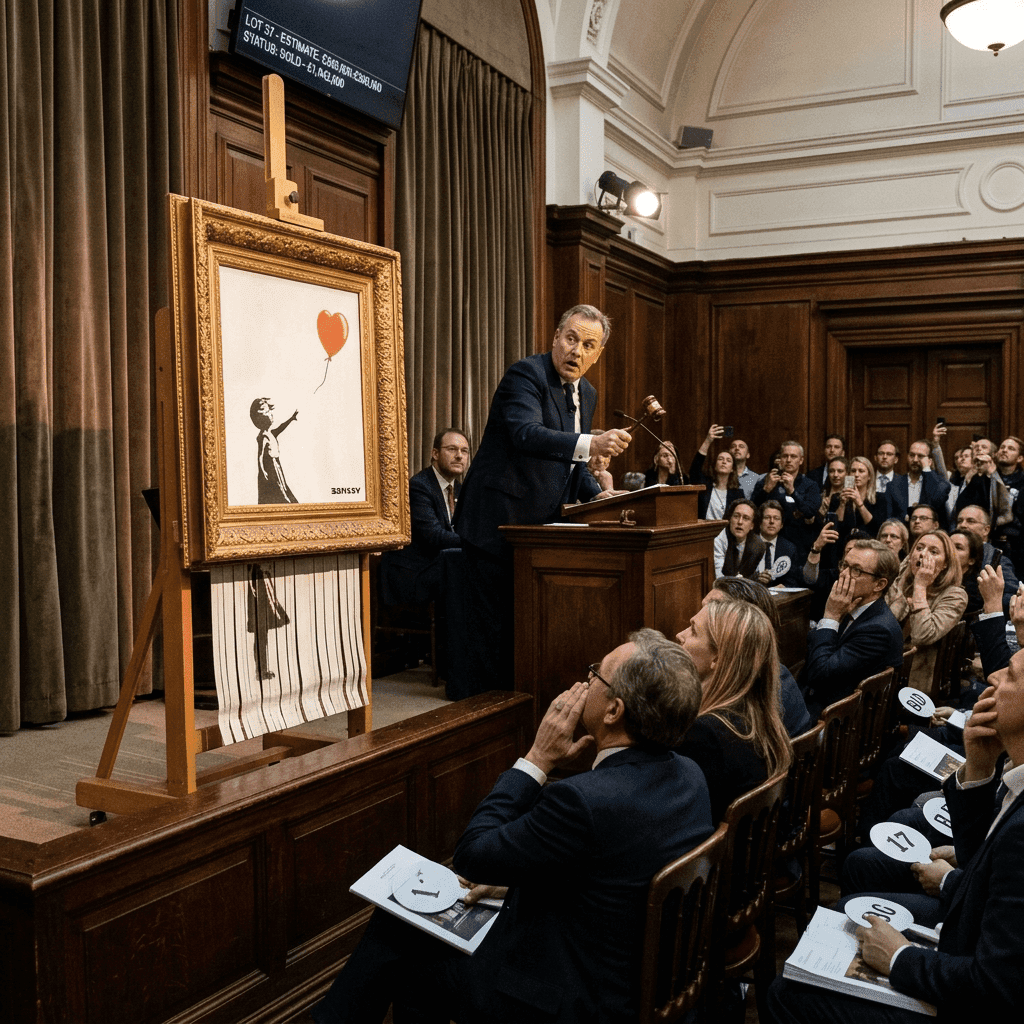
To fully comprehend the raw, rule-breaking power of illegal street subcultures, we have to sneak inside the elite London showroom of Sotheby’s during a high-stakes contemporary art auction. Imagine rows of sharp-suited billionaires, international hedge-fund managers, and museum directors holding their breath as the final lot took the stage. It was an iconic, spray-painted canvas titled Girl with Balloon by the world’s most famous underground provocateur, Banksy.
Suddenly, the auctioneer’s gavel slammed down to seal a massive, record-breaking sale price of $1.4 million. Instead of a polite round of applause, a loud, mechanical alarm instantly triggered from deep inside the heavy gilded frame.
The crowd went into an absolute state of sheer panic and confusion! Consequently, right before the eyes of the global elite, the canvas began sliding downward through a hidden, built-in shredder, slicing the million-dollar masterpiece into neat, dangling vertical ribbons.
This dramatic, unscripted stunt instantly backfired on the traditional gatekeepers in the best way possible. As a result of that calculated creative rebellion, the newly shredded artwork—re-titled Love is in the Bin—doubled its financial value overnight, later selling to an investor for a staggering $25.4 million according to official historical Sotheby’s auction logs. Banksy proved to the world that the raw, chaotic energy of street culture cannot be tamed by institutional vaults; it thrives on pure subversion.
Why Does Context Dictate Whether Spray Paint Is Treated as a Crime or a Commodity?
Moving forward from that auction-room adrenaline rush, let’s look at the hard-hitting structural metrics that separate raw defacement from respected public monuments. Because the tools—primarily high-pressure spray cans, caps, markers, and stencils—are virtually identical, the line between a felony charge and a tourist landmark relies entirely on intent and authorization.
- The Signature Tag vs. The Narrative Scene: Traditional graffiti focuses heavily on name-based typography, underground lettering techniques, and quicksignatures designed for internal community status. Public-facing street art, however, generally deploys image-led portraiture, figurative scenes, or clear social messages designed to instantly hook a passing crowd as highlighted by contemporary urban design studies at the STRAAT Museum.
- The Legal Free-Wall Evolution: Forward-thinking municipalities are aggressively abandoning zero-tolerance cleanup policies. By establishing designated, legal “free walls,” cities allow emerging creators a safe space to practice complex color blending, large-scale balance, and composition metrics without the constant risk of arrest.
- The Gentrification Paradox: When a rogue artist paints a masterpiece on a crumbling concrete wall overnight without permission, it is legally classified as vandalism. Yet, property developers frequently leverage that exact raw, edgy aesthetic to drive up local real estate values, inviting famous muralists to beautify neighborhood corridors and attract retail footprints.
How Do Emerging Creators Build Global Careers Outside the Traditional Gallery Matrix?
In addition to rewriting the physical rules of urban architecture, the digital age has handed street culture the ultimate decentralized shortcut. Furthermore, this media shift allows creators to completely bypass old-school gatekeepers who long controlled artist representation.
1. The Social Media Virtual Museum
- The Strategy: Street art is inherently temporary, vulnerable to weather, demolition, or immediate municipal paint-overs.
- The Execution: Modern creators use high-definition photography and short-form video to document their underground interventions the second the paint dries, launching their work directly onto global discovery algorithms. This open digital distribution creates an instant, borderless web exhibition space that reaches millions of eyes without requiring a gallery contract.
2. The Commercial Brand Syndicate
- The Strategy: Global consumer brands are desperately chasing the raw authenticity of street style to connect with younger demographics.
- The Execution: Elite street artists are leveraging their massive online followings to secure premium partnerships, designing everything from limited-edition luxury streetwear capsules to custom automotive wraps and tech accessory lineups, transforming street-level street cred into sustainable commercial revenue.
What Tactical Protection Strategies Preserve the Value of Exposed Murals?
Ultimately, mixing a raw outdoor creative practice with high-stakes financial valuation requires deploying precise material engineering. When a piece of public art becomes a multi-million-dollar city asset, conservation teams must defend the physical paint from weather degradation and competing tags.
- The Sacrificial Anti-Graffiti Shield: Conservationists apply high-tech, clear polymer coatings directly over completed public murals. This breathable wax layer prevents subsequent illegal tags or markers from bonding to the primary artwork. If the wall gets hit by unauthorized tags, crews can easily wash the top layer away using simple hot water without damaging the historic underlying acrylics.
- The UV-Resistant Acrylic Barrier: Outdoor street paint faces continuous, brutal fading from direct sunlight exposure. Elite muralists insist on utilizing premium, high-pigment spray paints formulated with advanced ultraviolet inhibitors to keep color saturation sharp, vivid, and resistant to oxidation for decades.
- The Modular Plexiglass Shield: For ultra-rare, high-value stencils left behind by iconic figures on commercial streets, building owners regularly install custom-fitted, heavy-duty sheets of clear polycarbonate plexiglass over the brickwork, securing the paint from weather elements and physical scraping.
Final Thoughts: Claim the Canvas of the Streets
In short, the fast-fashion matrix wants our urban spaces to look perfectly uniform, corporate, and completely sterile. Embracing the chaotic, colorful world of public murals and raw lettering is your ultimate cultural escape hatch, allowing you to appreciate a living art form that changes its energy with every passing season. So, skip the sterile gallery lines, step onto your local city streets with sharp eyes tonight, and start reading the walls like a dynamic public archive. Hit the pavement, embrace the bold visual signatures around you, and own your perspective—because the ultimate masterpiece isn’t locked in a vault, it’s painted on the world right in front of you!
