
Let’s be entirely real for a second: we live in an era where people call themselves “multi-hyphenates” just because they have a day job and an Instagram page. But if you want to know what a true, unadulterated genius looks like, you have to rewind 500 years to a man who didn’t just participate in the Renaissance—he single-handedly drove it off a cliff of pure imagination. Leonardo da Vinci wasn’t just a painter who dabbled in sketching; he was a high-energy, rule-breaking visionary who basically treated the entire physical universe as his personal playground.
Forget about dusty, boring history lessons that treat him like a quiet, grandfatherly figure in a robe. Leonardo da Vinci was a bold, charismatic, left-handed vegan rockstar who dissected human corpses by candlelight, designed futuristic flying war machines, and painted masterpieces that still have global cryptographers scratching their heads today. Here is your detailed, high-utility blueprint to the mind of history’s greatest polymath, featuring a dramatic courtroom showdown that almost ended his career before it even started
How Did a Anonymous Blackmail Note Almost Destroy the King of the Renaissance?
To understand the gritty, high-stakes reality of living as a rogue genius, we have to travel back to the shadowy, gossip-fueled streets of Florence in April 1476. Imagine a 24-year-old Leonardo, a remarkably handsome young artist with long flowing hair, bursting with raw talent but totally unestablished. He was working late in the studio of the legendary master Verrocchio when suddenly, an anonymous letter was dropped into the Tamburi—the wooden boxes outside the Palazzo della Signoria used for secret citizen accusations.
The charge was sodomy, a capital crime in 15th-century Florence that could easily end with public execution or permanent banishment. The note specifically named Leonardo and three other young men.
The entire Florentine art world went into an absolute panic! Consequently, Leonardo found himself dragged into a terrifying, high-stakes legal trial, facing the very real prospect of prison or death before he had ever painted a single major masterpiece. Instead of backing down or confessing, Leonardo and his friends stood their ground through months of agonizing suspense.
Ultimately, because the anonymous accuser failed to show face and provide physical evidence, the magistrates dismissed the case entirely. This dramatic brush with death changed him forever. As a result of this narrow escape, Leonardo became fiercely private, coding his notebooks in mirror-writing and channeling his intense, manic energy into absolute secrecy and creative perfection—proving that a true maverick thrives when pushed to the absolute edge.
Why Did Leonardo’s Most Ambitious Masterpiece Vanish Into Thin Air?
Moving forward from his early legal drama, let’s diagnose his chaotic, hyperactive workflow. Because Leonardo’s brain moved at roughly a million miles per hour, he was notoriously terrible at actually finishing the projects people paid him for.
- The Battle of Anghiari Disaster: In 1504, the Florentine government hired Leonardo to paint a massive, high-energy war mural inside the Palazzo Vecchio. Instead of using traditional, reliable fresco techniques, Leonardo decided to experiment with a wild, untested oil-based wax mixture.
- The Flaming Failure: The thick paint refused to dry on the damp wall. In a frantic, desperate move, Leonardo brought in massive charcoal braziers to blast heat onto the wall. Consequently, the wax melted completely, and his jaw-dropping masterpiece liquefied and ran down the wall right before his eyes. Today, his greatest lost masterpiece remains hidden beneath later layers of stone, a legendary ghost of art history.
How Did His Forbidden Anatomy Lab Launch a Scientific Revolution?
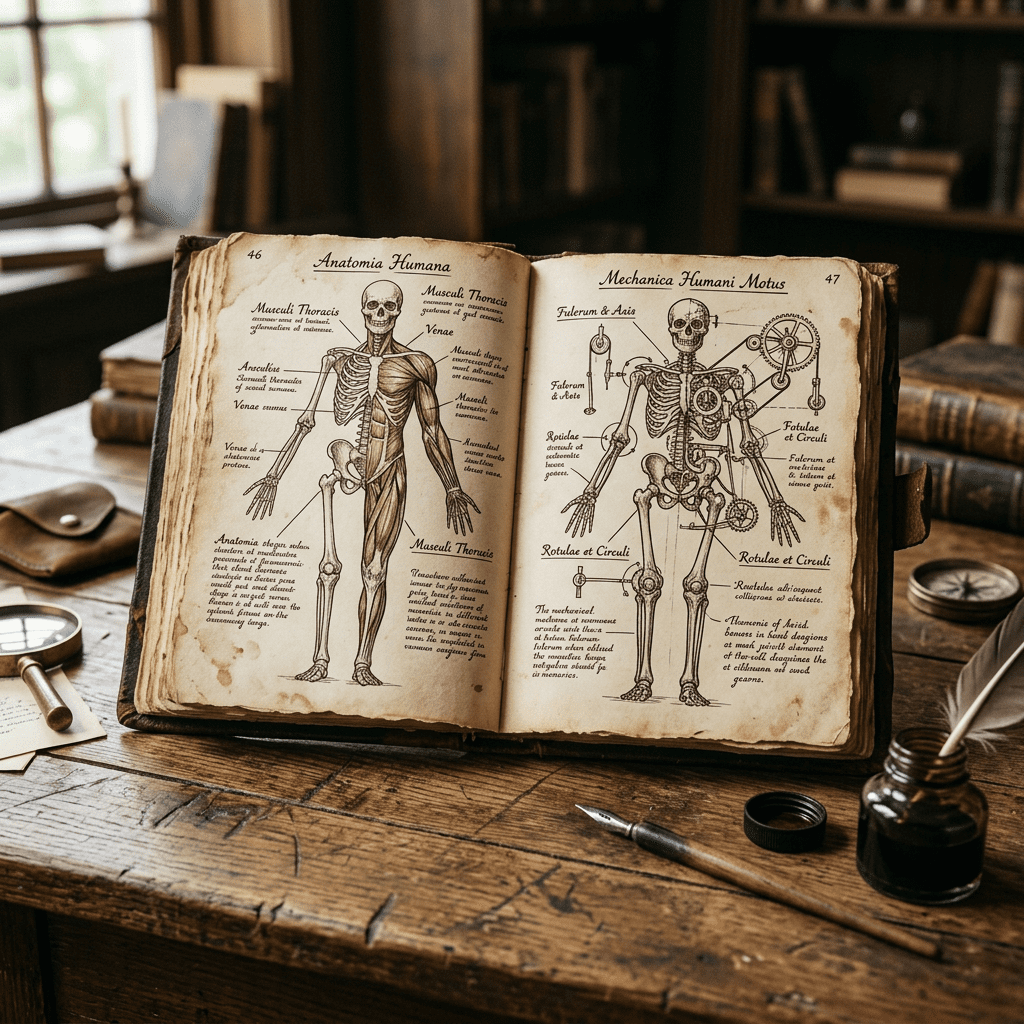
In addition to his artistic triumphs, Leonardo was utterly obsessed with understanding the physical machinery of life. Furthermore, he realized that to paint a human being flawlessly, he had to know exactly what lay beneath the skin.
1. The Midnight Dissections
- The Strategy: Leonardo partnered with physicians and snuck into dark morgues in Florence, Milan, and Rome.
- The Execution: He peeled back skin, mapped muscles, and unraveled veins on over 30 human cadavers. He was the very first person to accurately draw the human spine, find the correct chambers of the heart, and sketch a fetus inside the womb.
2. The Codex Leicester Breakdown
- The Strategy: He didn’t just study bodies; he studied the planet’s circulatory system.
- The Execution: In his famous notebooks, he mapped out exactly why the sky is blue, how water current physics mirror human blood flow, and how the moon reflects sunlight. His observations were so far ahead of his time that billionaires like Bill Gates have paid over $30 million just to own a single notebook layout.
What Futuristic War Inventions Did He Pitch to Tyrannical Rulers?
Ultimately, mixing a brilliant imagination with a cutthroat political landscape turned Leonardo into the world’s most sought-after military engineer. When he moved to Milan, he sent a legendary 10-point resume letter to the ruthless Duke Ludovico Sforza, barely mentioning his painting skills and focusing entirely on weapon design.
- The Renaissance Tank: He drafted blueprints for a giant, turtle-shaped wooden armored vehicle propelled by manpower and armed with cannons shooting in a 360-degree radius.
- The Robotic Knight: Long before computers, Leonardo engineered a complex system of internal pulleys, gears, and cables inside a suit of armor. When cranked, this mechanical marvel could stand, sit, lift its visor, and wave its arms—effectively creating the world’s first humanoid robot.
- The Flying Ornithopter: Obsessed with the flight mechanics of bats and birds, he filled pages with designs for mechanical wings operated by foot pedals and hand winches, laying the literal structural groundwork for modern aviation centuries before the Wright brothers were ever born.
Final Thoughts: Are You Ready to Channel Your Inner Polymath?
In short, Leonardo da Vinci proved that true genius cannot be contained in a single box. He was an absolute force of nature who showed the world that art and science are the exact same currency of curiosity. So, stop limiting your own potential, embrace your weirdest ideas, and look at the world with fresh eyes. Pick up a sketchbook, question everything around you, and live with absolute passion—because the greatest tribute you can pay to the original master is to keep creating without permission.
