
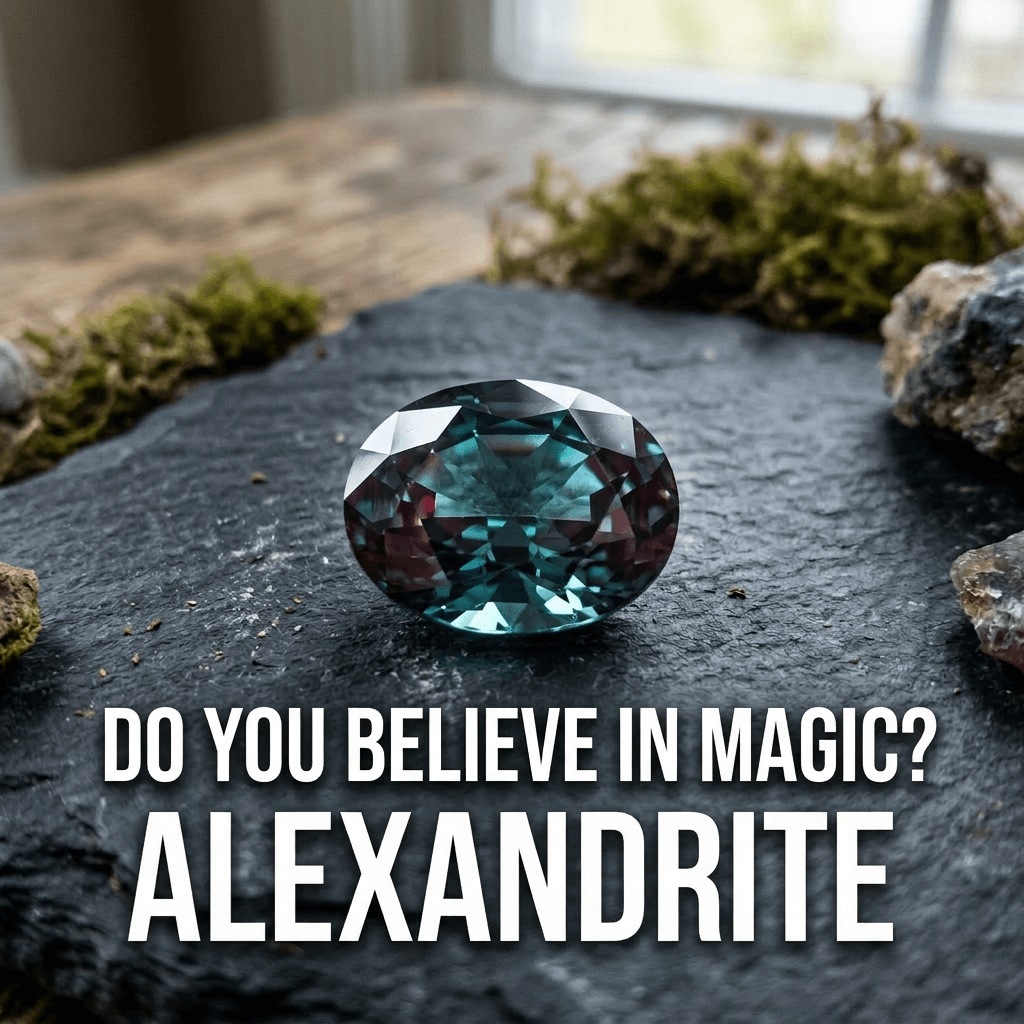
Imagine holding a literal piece of magic that morphs from a lush, sunlit garden into a blazing, fiery furnace the exact second you step indoors! This isn’t a fantasy spell—it is the reality of owning the world’s most mind-bending, shape-shifting gemstone.
Ready for a Thrilling Tale of Deception and Tsars?
Deep within the dark, freezing embrace of Russia’s Ural Mountains in 1830, a exhausted miner named Yakov slammed his pickaxe into a jagged rock face. A cluster of deep green crystals fell into his trembling hand. “Emeralds!” he screamed, his voice echoing through the cavern, imagining a life of unimaginable wealth. He stuffed them into his coat and collapsed into sleep by the roaring camp fire. But when he awoke in the dead of night, he cast his lantern over his prize. Yakov let out a blood-curdling shriek and dropped the stone. The green gems were gone; in their place lay pebbles glowing like fresh, bleeding wounds. He thought he was cursed by mountain demons.
In reality, Yakov had just stumbled upon the very first deposit of alexandrite. This astonishing variety of chrysoberyl was officially named in honor of the future Tsar Alexander II on his coming-of-age birthday. It instantly became the darling of Russian royalty because its shifting green and red hues perfectly matched the military colors of Imperial Russia.
Why Does This Chrysoberyl Pull Off Nature’s Best Magic Trick?
How can a single, solid rock completely rewrite its identity when the sun goes down? According to scientific analysis by the Gemological Institute of America (GIA), this optical illusion is famously called the “alexandrite effect”. The secret lies in complex chemical alchemy. As the mineral forms over millions of years, trace amounts of chromium ions get trapped inside the crystal matrix.
When sunlight or fluorescent light strikes the stone, it strongly reflects the blue and green wavelengths of the spectrum, giving it a cool, verdant tone. But when you step into warm, incandescent candlelight, the chromium absorbs the yellow wavelengths and projects a rich, purplish red. It is a living, breathing paradox—truly an emerald by day, ruby by night.
Is Alexandrite Actually Rarer Than Diamonds?
If you think diamonds are the pinnacle of luxury, think again! Natural, high-quality alexandrite is one of the scarcest treasures on Planet Earth, making diamonds look downright common by comparison. The legendary, vivid mines of Russia were depleted long ago, and today’s small deposits in Brazil, Sri Lanka, and East Africa rarely produce large, clear stones.
Because of this extreme scarcity, the value of a top-tier specimen is astronomical. While a standard diamond might cost a few thousand dollars, a single carat of natural Russian alexandrite boasting a dramatic, clean color transformation can easily command between $2,000 and $50,000 in the collector’s market.
How Do You Spot a Flawless Stone Like an Elite Gemologist?
Shopping for this phenomenal chameleon requires a sharp eye and a bit of insider knowledge. When evaluating a stone, you must look for specific quality factors outlined by consumer protection groups like the American Gem Society (AGS):
- Color Change Percentage: The most critical price factor; a premier stone must show a distinct, 100% dramatic shift from crisp teal-green to definitive raspberry-red, without muddy brown undertones.
- Clarity and Inclusion Traps: While most natural stones feature tiny, microscopic inclusions, you want an “eye-clean” gem where internal flaws don’t block the light play.
- The Cat’s Eye Phenomenon: In exceptionally rare cases, parallel needle inclusions create a striking, glowing line across the center, giving you a prized “cat’s eye alexandrite”.
- The Durability Factor: Ranking at an impressive 8.5 on the Mohs hardness scale, this gem is tough enough for everyday jewelry wear, easily outlasting softer stones like opals or tanzanite.
If you ever get the chance to witness a real, unheated alexandrite transition right before your eyes, do not blink—you are looking at the crown jewel of nature’s magic show.
