
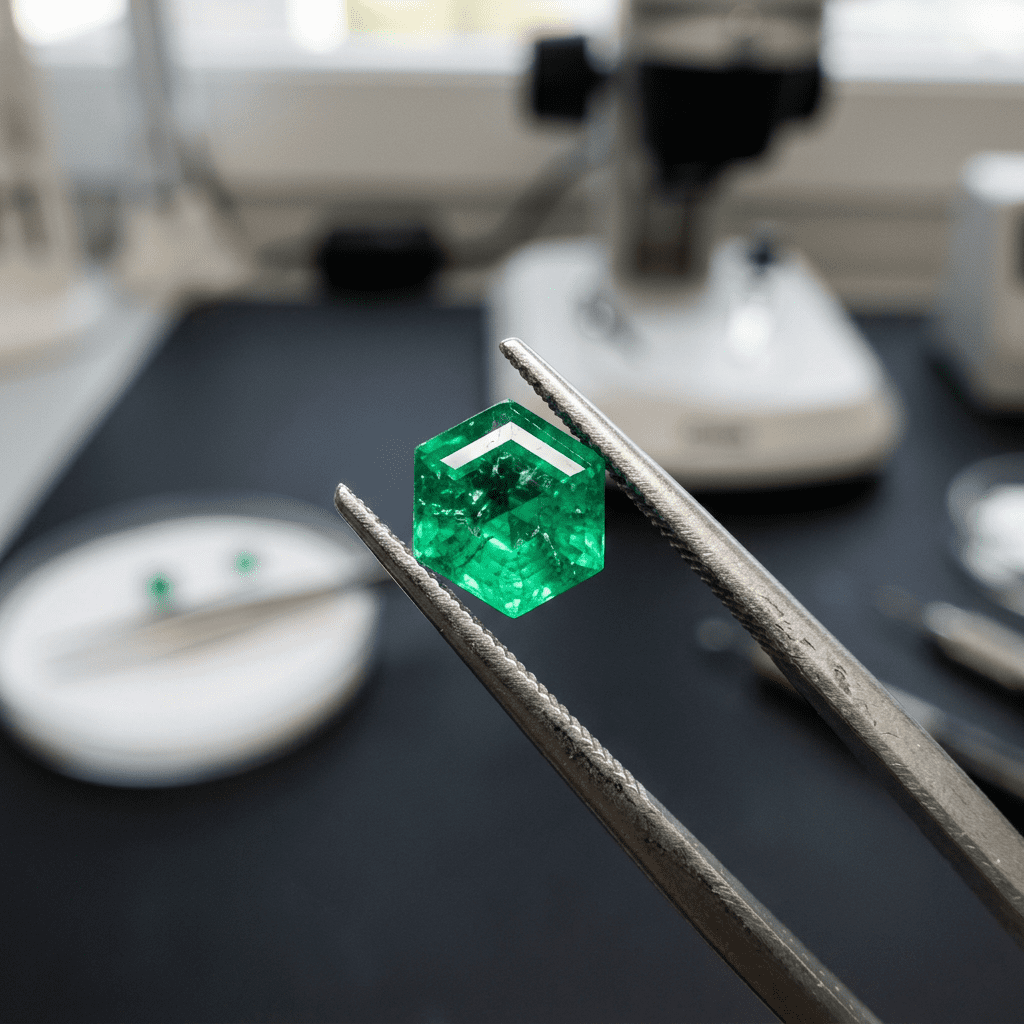
Let’s be entirely real for a second: the jaw-dropping, vibrant gemstones you see sparkling in high-end jewelry store windows didn’t just wake up looking like that. Just like a Hollywood star stepping onto the red carpet, almost every precious stone gets a heavy dose of professional “makeup” before making its grand debut. In fact, mastering the science behind how the industry uses specialized gemstone enhancements is the ultimate insider trick to understanding why certain rocks possess such a magnetic, flawless allure.
Forget the myth that every stone pulled from the earth is born perfect. The reality is that the jewelry market relies on high-tech cosmetic upgrades—from literal thermal facials to oil-based wrinkle fillers—to make rough minerals look absolutely irresistible to buyers.
Here is your detailed, high-utility guide to the secret cosmetic treatments used to make gemstones look more attractive, featuring a dramatic auction-room story that proves why disclosure is everything in the luxury world.
How Did a Naked Emerald Spark a Million-Dollar Heart Attack?
To truly understand how much the market relies on gemstone cosmetics, we have to look back at a dramatic, high-stakes auction in Geneva. Imagine an elite showroom packed with billionaire collectors, where a massive, deep green Colombian emerald ring was up for grabs. Bidding erupted like wildfire, with paddles flying into the air until the price hammered down at a staggering, record-breaking $2.4 million. The buyer was ecstatic, believing they had just secured the rarest, most naturally flawless rock on the planet.
Suddenly, a routine independent lab certification came back with a bombshell revelation: the emerald had recently been steam-cleaned by an amateur jeweler. Instead of preserving its beauty, the cleaning process accidentally stripped away the invisible, specialized oils hidden deep inside its natural fissures. Without its “makeup,” the emerald instantly dried out, exposing a chaotic web of internal cracks that made it look cloudy, dull, and fractured.
The buyer was completely horrified! Consequently, the gem’s appraised value plummeted by nearly 60% in a single afternoon because its cosmetic treatments hadn’t been properly maintained or disclosed. This dramatic baseline story proves exactly why understanding gemstone enhancements is completely mandatory—knowing how a stone’s “makeup” is applied and preserved is the difference between owning an immortal masterpiece and an expensive optical illusion.
What Kind of Thermal Facials Give Sapphires and Rubies Their Killer Hues?
Moving forward from that high-society drama, let’s diagnose the absolute king of gemstone cosmetics: Heat Treatment. Because nature doesn’t always deliver perfect saturation, scientists and lapidaries cook rough corundum minerals inside massive, high-pressure furnaces at temperatures exceeding 3,000°F (1,600°C).
- The Deep Blush effect: Just as a swipe of blush warms up your cheeks, extreme heat permanently dissolves internal microscopic rutile needles inside raw sapphires and rubies.
- The Flawless Glow: This thermal breakdown allows the iron and titanium elements to redistribute evenly throughout the crystal lattice. Ultimately, a dull, muddy brown rock goes into the furnace and emerges as a blinding, electric blue sapphire or a fiery, pigeon-blood red ruby. Over 95% of all rubies and sapphires on the market undergo this exact thermal makeup routine, making it an industry-standard practice.
How Do Oils and Resins Act as the Ultimate Wrinkle Filler for Emeralds?
In addition to intense heat treatments, the jewelry trade relies heavily on topical and internal clarity enhancers. This is most commonly seen in the emerald trade, where a stone’s natural internal birthmarks—affectionately called jardin (the French word for garden)—reach the surface of the gem.
1. The Cedarwood Oil Face Lift
- The Concept: Think of this as the ultimate medical-grade skincare routine for stones.
- The Utility: Emeralds are placed into specialized vacuum chambers where colorless cedarwood oil or liquid epoxy resins are forced into the microscopic surface cracks. Because the oil has the exact same refractive index as the surrounding emerald crystal, light passes straight through the fractures instead of bouncing off them. This instantly disguises the “wrinkles,” transforming a heavily fractured rock into a crystal-clear, deeply transparent luxury masterpiece.
2. The Color-Doped Dye Job
- The Concept: When a mineral is naturally too pale to turn heads, gem cutters use permanent dyes to cheat the system.
- The Utility: Porous stones like agate, chalcedony, and low-grade jadeite are frequently submerged in chemical dye baths. This process forces vibrant greens, deep blacks, and neon pinks deep into the stone’s microscopic pores, creating an ultra-consistent, highly striking color payoff that sells instantly on the commercial market.
What Is the High-Tech Tanning Bed Treatment Known as Irradiation?
Ultimately, mixing traditional methods with modern quantum physics is how the industry manufactures colors that are incredibly rare or completely non-existent in nature. This high-octane process is known as gemstone irradiation.
- The Neon Blue Topaz Transmutation: In its natural state, topaz is almost always a boring, colorless white crystal. To fix this, scientists blast the raw material with high-energy subatomic particles inside nuclear reactors or linear accelerators.
How it works: The radiation knocks electrons completely out of their normal orbits, creating “color centers” that trap light differently. Therefore, a quick trip through the cosmic tanning bed—followed by a light bake in an oven—instantly turns a worthless clear rock into a mesmerizing, deep London Blue or bright Swiss Blue topaz. It is safe, permanent, and creates a spectacular aesthetic at a highly accessible price point.
Final Thoughts: Are You Ready to Shop Like a Diamond District Pro?
In short, there is absolutely zero shame in buying a gemstone that has had a little work done. These professional cosmetic enhancements are what make gorgeous jewelry accessible to the rest of the world rather than just museum curators and royal families. So, drop the illusion of absolute perfection, embrace the fascinating science of gemstone makeup, and always demand full treatment disclosure from your jeweler. Keep your eyes sharp and your standards high, because the smartest buyers are the ones who know exactly how the sparkle is made!
