
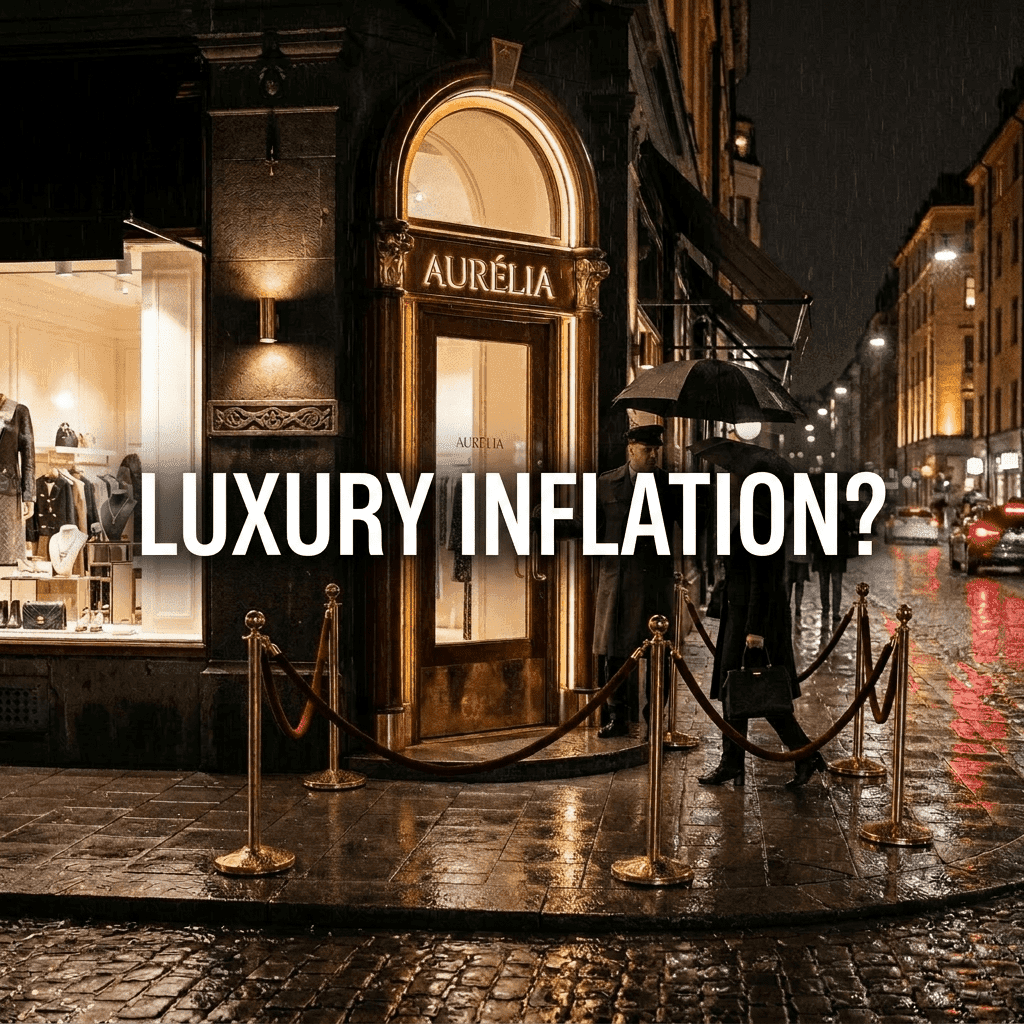
Step behind the heavy velvet ropes of any flagship boutique on Paris’s Avenue Montaigne, and you will find that the air feels noticeably lighter—mainly because a single calfskin handbag now costs roughly the same as a dependable used car. This eye-watering sticker shock is not an accidental glitch in the fashion matrix; it is the calculated, direct result of Luxury Brand Price Increases and Inflation. Over the last few years, elite fashion houses have aggressively redrawn the boundaries of exclusivity, fundamentally changing what it means to buy a premium heirloom. To navigate the modern high-end market without losing your mind, you must fully understand the economic forces steering Luxury Brand Price Increases and Inflation.
Ready for a Suspenseful Tale of Velvet, Vaults, and Vanishing Margins?
The rain beat a relentless rhythm against the floor-to-ceiling glass of the Parisian boardroom where Julian, a Senior Portfolio Director for a legendary European luxury conglomerate, stared blankly at his laptop screen. For five continuous quarters, global logistics data had flashed a terrifying, deep crimson code. The price of ethically sourced premium leather had surged by double-digit percentages, and shipping rates across international trade lanes were stubbornly refusing to stabilize. On the opposite side of the mahogany table sat Clara, the brand’s uncompromising Head of Heritage Strategy, her arms crossed tightly over a bespoke wool blazer. “If we do not adjust our positions by tomorrow morning,” Julian warned, his voice dropped to a low, urgent whisper, “global inflation will swallow our operational margins whole before the autumn collection even drops.”
Clara remained silent, her fingers lightly tapping a locked leather brief case containing the top-secret, unpublished global retail price list. Julian knew the terrifying stakes: if they raised prices too gently, investors would panic and dump shares; if they raised them too aggressively, they risked alienating millions of loyal, aspirational consumers overnight. With the board meeting starting in exactly twelve minutes, Clara finally snapped the brass locks of the briefcase open, pulling out the final draft of the pricing manifesto. She looked Julian dead in the eye and said, “We aren’t adjusting for inflation to survive, Julian. We are doubling the increase to erase the middle class entirely.”
Why are luxury prices completely outpacing global inflation?
While standard consumer goods usually adjust prices incrementally to match fluctuations in the Consumer Price Index (CPI), elite fashion houses do things very differently. High-end labels possess immense “pricing power,” an economic term highlighted in retail assessments by platforms like Forbes Magazine, meaning they can raise costs sharply without suffering a major drop in sales volumes.
This pricing behavior has completely decoupled from actual macroeconomic realities. Between 2015 and 2026, cumulative U.S. consumer inflation totaled roughly 40%. In stark contrast, iconic fashion staples like the Chanel Medium Classic Flap bag skyrocketed from $4,900 to a jaw-dropping $11,700 over the exact same period—representing an aggressive 139% markup. This trend clearly proves that these hikes are part of a deliberate corporate strategy to push products into a higher luxury tier rather than a simple reaction to economic stress.
What is the hidden business strategy behind these massive price hikes?
- Redrawing the Velvet Rope: Brands deliberately price out casual, aspirational shoppers to maintain extreme social prestige.
- Targeting the Ultra-Wealthy: Corporate focus has shifted heavily toward the top tier of Very Important Clients (VICs).
- Compensating for Supply Chain Costs: Higher operational costs for premium raw materials, artisanal labor, and secure shipping are passed directly to buyers.
- Simulating Absolute Scarcity: Aggressive pricing, combined with strict item purchase limits, forces a sense of high-stakes urgency among wealthy buyers.
How have legendary fashion staples shifted in retail value?
To see this transformation in action, you only have to look at the hard retail data compiled in the comprehensive Chanel Investment Report by SACLAB. The legendary Medium Classic Flap bag, which served as a baseline of luxury for generations, steadily climbed past the $10,000 threshold in 2024. Following further hikes, the price officially reached $11,700 in retail boutiques.
This aggressive, upward trajectory is visible across the entire luxury ecosystem. Industry data published by the fashion retail community at PurseBlog confirms that even smaller accessories, mini bags, and everyday staples like the Chanel Boy Bag line saw consistent price increases across all sizes. These constant, predictable upward adjustments have turned retail boutiques into elite spaces where only ultra-high-net-worth individuals can comfortably shop.
How is the luxury resale market reacting to this shift?
Because buying brand-new items directly from boutiques has become so financially restrictive, millions of collectors are completely altering their shopping habits. Market research shared by global management groups like McKinsey & Company shows that overall growth in the primary luxury sector is cooling down significantly, forcing brands to rethink their long-term customer relationships.
Concurrently, this slowdown has triggered an unprecedented boom in the secondary market. Savvy consumers now view pristine, pre-owned heritage items as genuine financial assets that retain value far better than traditional investments. This explosive growth in the secondary market provides a necessary fallback for fashion lovers who refuse to pay astronomical boutique premiums but still demand authentic, high-quality craftsmanship.
