
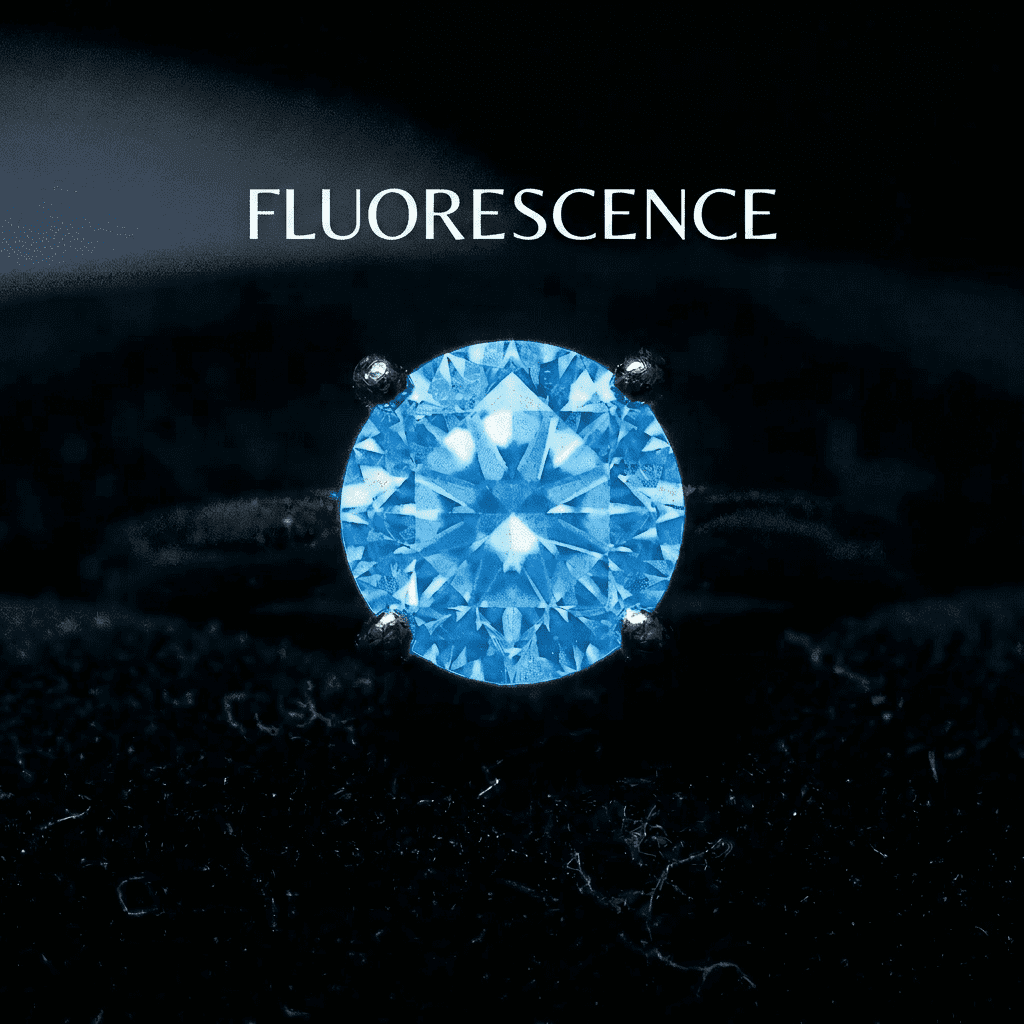
Prepare to have your mind absolutely blown by the secret, glowing superpower hiding inside the world’s most luxurious jewelry vaults! Deep within the earth, certain minerals absorb invisible ultraviolet light and instantly transform it into a vibrant, electric neon glow that defies imagination. This jaw-dropping phenomenon isn’t just a party trick for geologists; it completely alters how buyers, investors, and elite jewelers price precious materials. This comprehensive guide, Fluorescence in Gemstones and How It Affects the Gemstones Value: The Ultimate Glowing Guide, will reveal the exact science, the market secrets, and the critical valuation tactics you need to master this glowing market right now.
Ready for a Suspenseful High-Stakes Auction?
The heavy mahogany gavel hovered in the tense, silent air of the Geneva auction room as Elena clutched her paddle, sweat pooling on her palms. Before her lay the “Midnight Star,” a mesmerizing 10-carat D-color diamond estimated at a staggering three million dollars. The bidding had stalled, the elite crowd whispering nervously as rumors swirled about its hidden structural nature. Elena knew that if the diamond possessed a specific optical trait, its market worth could instantly plummet by thirty percent, bankrupting her boutique firm in a single second.
With a trembling hand, she pulled a pocket-sized shortwave ultraviolet flashlight from her velvet blazer and clicked the button, casting an invisible beam across the bulletproof glass case. The crowd gasped collectively as the pristine, icy diamond suddenly ignited into a fierce, ghostly blue fire, glowing like a radioactive coal in the dim room. A smirk spread across Elena’s face as the uneducated bidders panicked and backed out; she knew this specific blue glow actually masked a hidden yellow tint in sunlight, making it a spectacular steal. She snagged the prize for a fraction of its value, weaponizing her secret knowledge of atomic luminescence to pull off the ultimate luxury heist.
What Exactly Is Luminescence in Precious Crystals?
Fluorescence occurs when specific trace elements inside a mineral absorb invisible ultraviolet radiation and re-emit it as visible light. When you shine a UV light source on these reactive specimens, their atomic structures temporarily dance with vibrant greens, electric blues, or fiery reds. This optical phenomenon is primarily triggered by structural impurities or localized crystal lattice defects that react dynamically to energy stimulation.
In the diamond world, submicroscopic clusters of three nitrogen atoms trapped inside the carbon structure are the primary cause of this intense reaction. According to deep structural research compiled in the Gemological Institute of America (GIA) Fluorescence Study, approximately 25% to 35% of all gem-quality diamonds exhibit some degree of this glowing trait under laboratory testing. This reaction is graded on a strict qualitative scale ranging from None, Faint, and Medium, all the way up to Strong and Very Strong.
How Does Electric Blue Fire Dictate Diamond Pricing?
The financial impact of a luminous reaction depends heavily on the underlying body color of the specific diamond being evaluated. For top-tier, ultra-rare colorless diamonds graded D through F, the presence of strong ultraviolet reactivity is generally viewed as a flaw by institutional investors. The trade often penalizes these stones with a price discount of 3% to 15% because strong reactivity can occasionally make the crystal look cloudy, milky, or hazy in direct daylight.
However, for commercial budget buyers looking to maximize their purchasing power, this phenomenon acts as a brilliant, money-saving life hack. Diamonds with lower color grades, such as I through M, often suffer from an undesirable, warm yellowish body tint. Because blue is the exact complementary color to yellow, strong blue luminescence naturally neutralizes the yellow undertones when the stone is exposed to the UV rays present in natural sunlight. As detailed in the comprehensive PriceScope Diamond Value Guide, this optical trick effectively makes a lower-grade stone look one to two shades whiter and brighter for a fraction of the cost.
Why Do Rubies and Sapphires Command a Glowing Premium?
When dealing with colored gemstones, ultraviolet reactivity can drastically skyrocket an item’s market value rather than discounting it. The most famous example of this financial phenomenon occurs within premium, top-tier Burmese rubies. These legendary red stones are packed with chromium impurities, which simultaneously cause their rich red color and spark a intense, fiery red glow under sunlight.
This internal glowing effect completely masks dark extinction areas within the crystal, making the ruby look like it is burning from within. According to historical auction data curated by the International Gem Society (IGS) Value Metrics, rubies displaying strong chromium-driven luminescence command massive, record-breaking premiums over non-reactive stones. Conversely, iron impurities found in rubies from other geographic regions completely kill this glowing reaction, resulting in a duller, flatter appearance that diminishes final retail pricing.
