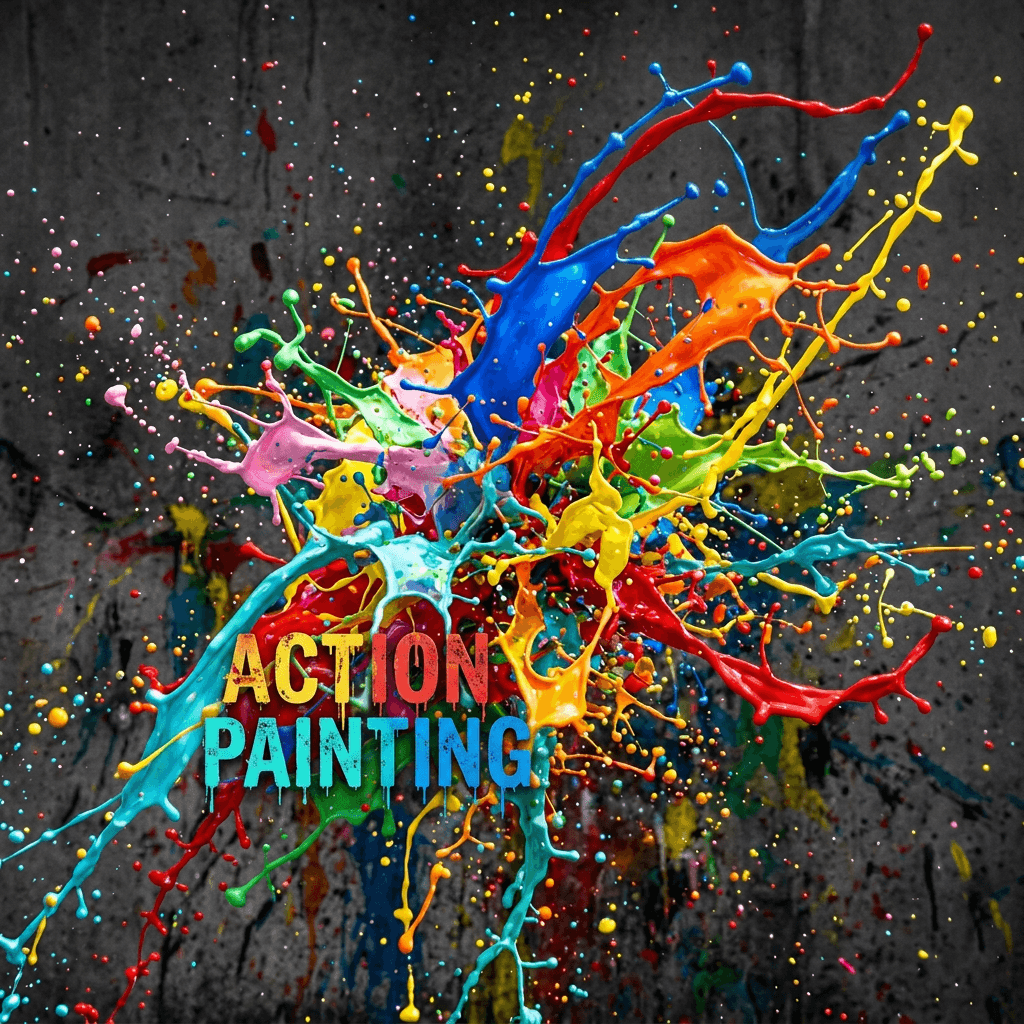
Forget everything you know about pristine art galleries, delicate quietness, and polite little paintbrushes because the world of action painting is about to violently shatter your reality! This isn’t just a guide on how to fling pigment at a canvas; it is your official invitation to break free from conformity and dive headfirst into the most liberating, chaotic, and emotionally charged movement in human history. If you have ever felt a burning urge to scream your deepest feelings onto a blank surface through pure physical motion, you are already an action painter at heart. Let’s uncover how this revolutionary method can transform your creativity, heal your soul, and turn your living room into a masterpiece of explosive, unfiltered passion!
Why Did a Splatter of Paint Cause a High-Stakes Romance?
The air in the cramped New York studio was thick with the scent of turpentine and undeniable, electric tension. Clara stared at the massive, raw canvas stretched across the floor, her breath catching as Julian stepped up to the edge. He didn’t look at her; his eyes were locked onto the void of the white cloth. Suddenly, with a wild, poetic ferocity, Julian dipped a heavy wooden stick into a can of jet-black enamel and leapt forward in a dizzying, dance-like stride.
Skeins of black liquid sliced through the air, tracing his frantic physical movement in mid-air before crashing onto the canvas. Clara watched, utterly mesmerized, as his entire body channeled pure, raw heartbreak into bold and energetic brushwork.
“It’s madness,” she whispered, stepping closer, the heels of her boots clicking against the paint-splattered floorboards.
“No,” Julian gasped, spinning on his heel, his arm swinging wide as a spray of shimmering silver metallic paint rained down. He stopped inches from her face, his chest heaving, his eyes burning with a desperate, creative fire. “It is the only true thing left. Paint with me, Clara. Let go of the rules!” Clara grabbed a hardened brush, dipped it into a fiery crimson hue, and with a liberating yell, hurled her own soul onto the floor. In that singular, chaotic moment of spontaneous action painting, their separate torments collided, bound forever by a beautiful, messy canvas of shared survival.
What Is the True History of Action Painting?
To truly appreciate this wild style, we must travel back to the mid-1940s and early 1950s. Coined by the legendary art critic Harold Rosenberg in 1952, the term describes a post-World War II movement where the canvas ceased to be a mere space to depict an object. Instead, as noted by TheArtStory’s Historical Review, the canvas became an arena in which to act.
Artists like Jackson Pollock famously abandoned the traditional easel and palette. Instead, they laid raw, unstretched canvas directly on the ground, physically stepping into the art piece. This radical shift birthed Abstract Expressionism, transforming art from a passive visual depiction into a permanent relic of a physical event.
Traditional Painting —> Focuses on the FINAL IMAGE (Passive, calculated)
Action Painting —> Focuses on the ACT OF CREATION (Dynamic, spontaneous)
How Do You Master the Core Gestural Techniques?
You do not need to be a seasoned maestro to start your journey into action painting. You just need to learn how to let your body guide your hands through specific gestural techniques. According to historical overviews from the Tate Art Terms Glossary, gestural art relies entirely on the physical expression of inner impulses.
- The Drip and Pour: Avoid direct physical contact with the canvas. Hold a stick, a trowel, or a open can of fluid paint above the surface and use your elbow and shoulder rotations to guide the falling streams.
- The Vigorous Sweep: Use oversized, coarse brushes or brooms. Engage your entire upper body to throw down heavy, sweeping marks that capture speed and momentum.
- The Splatter and Slap: Flick your wrist with sudden force to launch paint droplets. This introduces an element of beautiful chance, allowing random occurrences to interact with your artistic intent.
What Materials Do You Need to Get Started?
You do not need expensive, delicate oils to make this work. In fact, the original action painters actively rejected traditional art supplies in favor of utilitarian, everyday materials!
- Fluid Liquid Paints: Pick up affordable, liquid-heavy mediums like household latex paint, fluid acrylics, or gloss enamels. The high fluidity is essential for drawing in space.
- Heavy-Duty Canvas Tarps: Grab a large roll of unstretched cotton canvas or heavy drop cloths from a local hardware store. Lay it flat across your floor or backyard grass.
- Unconventional Applicators: Gather sticks, kitchen turkey basters, hardened old paintbrushes, or even palette knives to fling, ooze, and puddle your colors.
Why Is This Style So Mind-Bogglingly Therapeutic?
Beyond making your walls look incredibly modern and chic, engaging in this dynamic process acts as a massive emotional release valve. Because there is no premeditated plan or final composition in mind, you completely bypass the inner critic that paralyzes your everyday creativity.
As documented by researchers exploring The American Scholar’s Art Essays, this physical act creates a deep, honest window into your subconscious mind. It allows you to process stress, joy, anxiety, and passion through raw movement, turning your unvarnished human energy into something stunningly tangible.
Are you ready to grab a stick, step onto the canvas, and let your emotions explode? The arena is waiting for you!
