
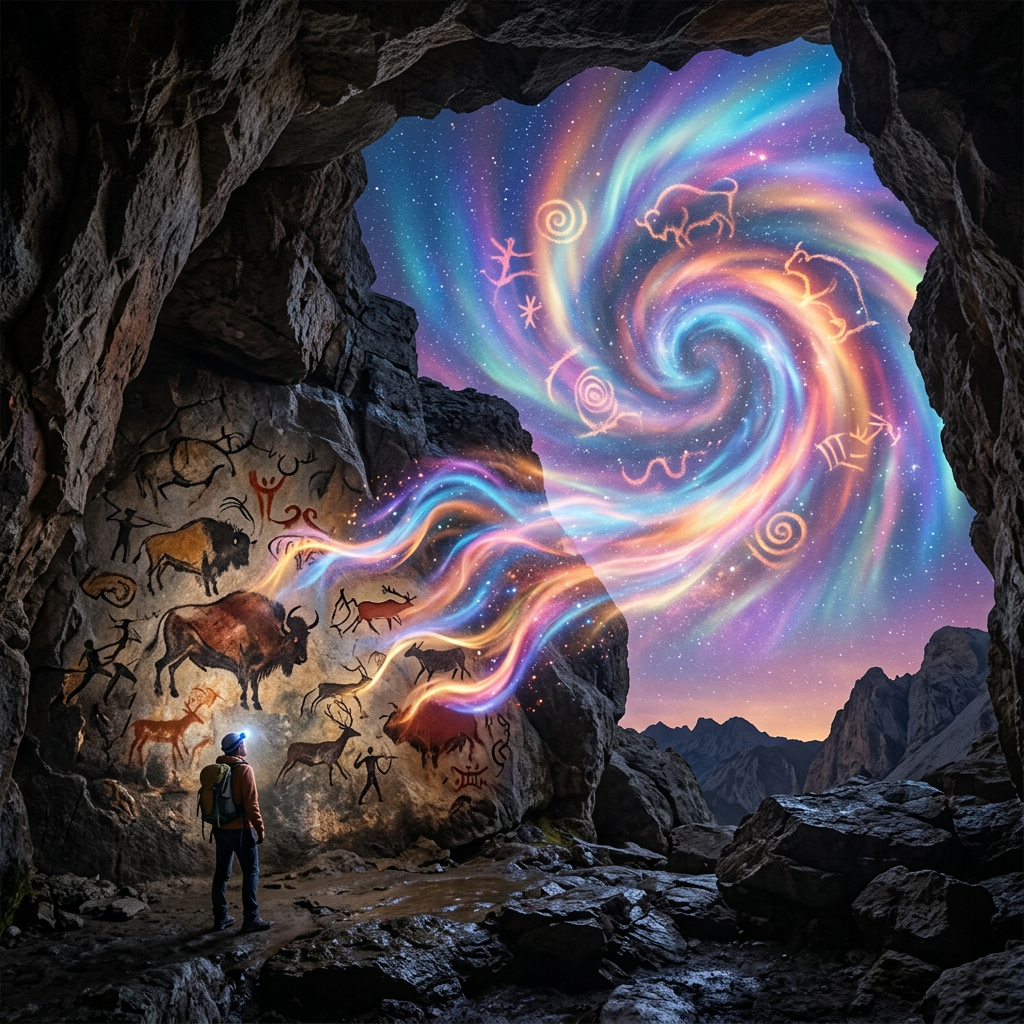
Have you ever looked at a breathtaking mural or a striking sculpture and wondered where the human obsession with creativity actually started? While we often view art as a modern luxury found in quiet, sophisticated museums, its true origin story is a high-energy explosion of human passion. In fact, thousands of years before the first canvas was ever stretched, our ancient ancestors were already turning the wilderness into their personal creative studio.
Far from being a boring history lesson, the birth of art is a thrilling tale of survival, communication, and pure imagination.
Here is the upbeat, energetic story of how art began, how it shaped humanity, and why we are wired to create.
The Ultimate Spark: Rocking the Stone Age
To find the very first brushstroke, we have to travel back roughly 40,000 years into the deep, mysterious ice age. Imagine a world of freezing winds, massive woolly mammoths, and dark, shadowy caves. Instead of just focusing on survival, our ancestors decided to do something completely revolutionary: they decided to decorate.
Suddenly, deep inside caves across Europe, Africa, and Asia, humans grabbed charcoal from their fires and ground up colorful earth minerals like red ochre. Consequently, by blowing pigment through hollow bones, they turned their own hands into the world’s first stencil spray guns.
Over time, these early creators filled dark cavern walls with dynamic, leaping horses, charging bison, and powerful hunters. As a result, the world’s very first art galleries were born in the flicker of campfire light, instantly transforming cold stone into a vibrant celebration of life.
More Than a Hobby: The Original Social Media
Moving forward from those initial cave walls, art quickly stepped into its role as humanity’s ultimate communication tool. Because spoken languages were still developing and writing didn’t exist yet, visual storytelling became the original internet.
In fact, these ancient paintings weren’t just random doodles. They served as vital survival guides, hunting maps, and community notice boards. Furthermore, creating art together bonded early human tribes, helping them share spiritual stories and celebrate major victories.
In addition to cave paintings, early artisans began carving portable figurines and shaping clay into intricate designs. Ultimately, art became the ultimate universal language, allowing different tribes to share ideas and connect across vast distances without speaking a single word.
Unleashing the Human Imagination
Beyond its practical uses for survival, the birth of art signaled a massive evolutionary leap. It proved that humans had developed the incredible ability to think abstractly and imagine things that weren’t right in front of them.
Fast forward through the centuries, and that initial spark of cave creativity completely exploded. It laid the foundation for the colorful pottery of ancient Greece, the breathtaking monuments of Egypt, and every digital masterpiece we swipe through today. Therefore, every time you doodle in a notebook, snap a photo, or paint a canvas, you are directly tapping into a powerful, 40,000-year-old human superpower.
Final Thoughts: The Creative Fire Lives On
In short, art didn’t start in an elite gallery—it started with a burst of passion, a handful of dirt, and a desire to say, “I was here.” It is a fiery, energetic testament to human resilience and joy. So, the next time you create or admire a piece of work, remember that you are carrying the torch of our ancestors’ wildest dreams. Keep creating, because the adventure that started in the caves is still going strong!
