
Why Did Roman Artists Obsess Over Every Single Wrinkle?
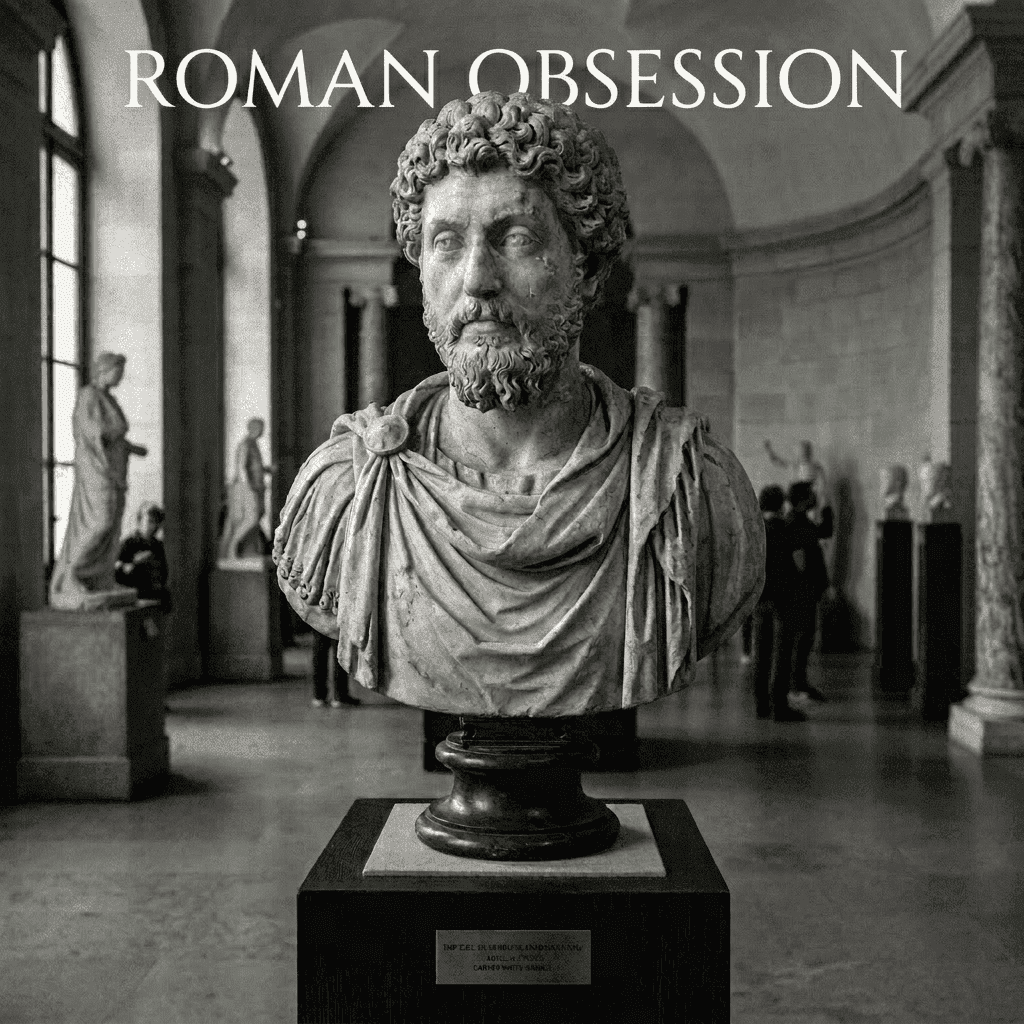
Forget the flawless, photoshopped ideals of the Greeks. The Romans didn’t care about making you look like a flawless god; they wanted you to look like a hardened warrior who had survived decades of political backstabbing. Welcome to the world of Roman art, where raw, unedited reality was the ultimate status symbol! This artistic philosophy is known as verism, a hyper-realistic style where every facial defect, deep wrinkle, receding hairline, and battle scar was captured in stunning, unfiltered detail.
While other ancient cultures used art to escape reality, the Romans weaponized reality. To them, a face carved with deep, heavy lines wasn’t old—it was powerful. It proved you possessed auctoritas (spiritual authority) and gravitas (serious effort). If you were a Roman senator, you didn’t want a smooth, youthful face. You wanted to look like you hadn’t slept in forty years because you were too busy running an empire. It was the ancient equivalent of a high-definition, uncropped documentary.
What Was the Deadly Secret Behind the Emperor’s Missing Head?
Let us drop you straight into a chaotic, sun-drenched marble workshop in the heart of Rome, 180 AD. Imagine the deafening sound of dozens of chisels hitting stone and a master sculptor sweating profusely as a panicked imperial messenger bursts through the doors. The news is catastrophic: the current Emperor has just been brutally assassinated in a palace coup, and a ruthless new tyrant has taken the throne.
The sculptor doesn’t panic. Why? Because the Romans invented the ultimate, survivalist artistic hack: modular statues. To keep up with the chaotic, fast-paced political turnover of the empire, workshops mass-produced generic, highly idealized marble bodies clad in military armor or flowing togas.
The heads, however, were carved separately and designed with a simple peg-and-socket system. When an emperor was overthrown, artists didn’t smash the entire monument. They simply climbed a ladder, popped off the old ruler’s head, and snapped on the face of the new conqueror! This brutal practice, intertwined with damnatio memoriae (the official erasing of a person from history), turned public statues into the world’s first interactive, real-time political propaganda feeds.
Did the Romans Actually Invent the World’s First Propaganda Comic Strips?
If you think graphic novels and comic books are a modern invention, you need to look closer at Trajan’s Column. Standing a massive 115 feet tall in the center of Rome, this towering marble monument is actually a continuous, 623-foot-long visual narrative wrapped entirely around a stone shaft. It is the ultimate ancient war documentary, depicting the Emperor Trajan’s epic, bloody victory over the Dacians.
The level of detail carved into this stone is absolutely staggering. Across 155 distinct scenes, you can witness:
- Roman legions engineering massive floating bridges
- Intense, hand-to-hand combat in dense forests
- Crying, captured enemy families being marched away
- Trajan delivering fiery, motivational speeches to his troops
This wasn’t just decorative art; it was a loud psychological power move. Because the vast majority of the Roman population was completely illiterate, this colossal visual masterpiece allowed everyday citizens to walk up, look up, and visually consume the terrifying, unstoppable might of their empire.
How Did Ancient Engineers Build a Dome That Defies Physics?
If you walk into the Pantheon in Rome and look straight up, your jaw will hit the floor. You will find yourself staring into the largest unreinforced concrete dome on the entire planet. Built under Emperor Hadrian around 125 AD, this architectural marvel features a massive, 30-foot-wide open hole right at its peak called the oculus. When it storms in Rome, a giant cylinder of pouring rain falls directly into the building, draining away through secret, angled holes engineered into the marble floor.
How on earth has this colossal concrete ceiling survived for nearly two thousand years without collapsing under its own immense weight? The Romans cracked the code by using a genius, tiered material recipe.
At the base of the dome, they mixed the concrete with heavy, dense basalt stone to create a solid foundation. As the dome curved upward toward the sky, they progressively swapped out the heavy stone for lighter volcanic tufa, and finally, ultra-light, porous pumice at the very top. They also carved deep, receding square pockets called coffers into the interior ceiling, effectively removing tons of heavy concrete without sacrificing an ounce of structural integrity. It is an breathtaking fusion of high-end art and raw, structural wizardry.
Why Does This Brutal Empire’s Art Still Dictate Our Modern World?
Why do we continue to study, protect, and copy the artistic style of a long-dead, ruthless empire? Because Roman art completely shattered the boundary between aesthetic beauty and daily utility. While the Greeks created art to look at, the Romans created art to live in, use, and fear. They took the delicate, artistic sensibilities of the cultures they conquered and scaled them up to a massive, industrial global level.
Every time you look at a modern landscape painting that uses atmospheric perspective to create depth, you are looking at a style pioneered on the frescoed walls of buried villas in Pompeii. Every time you walk past a towering triumphal arch in a modern capital city, or look at a coin stamped with the realistic profile of a political leader, you are interacting directly with the visual legacy of Rome. The Romans didn’t just decorate their world; they engineered a timeless visual language of absolute authority that continues to shape our global landscape today.
