Hovering gently in the southern sky, not far from the tail of the Scorpion (in the
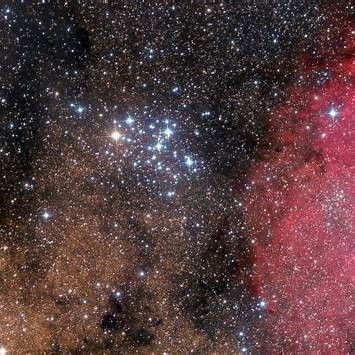
constellation Scorpius), is a sparkling cluster of stars shaped like a butterfly in flight. It’s
called Messier 6, or more poetically: the Butterfly Cluster.
It’s beautiful, brilliant, and ancient—and of course, it has a story worth telling.
The Myth of the Skyborn Twins
In the time of first starlight, there were two inseparable sisters, Aurelia and Lythea, born with
wings spun from comet dust and powered by solar wind. They were guardians of harmony,
fluttering between the stars, weaving gravity threads to keep galaxies from drifting apart.
Wherever they flew, stars danced into formation—trailing behind them like glitter on wind.
But their love was their undoing.
When a rogue god grew jealous of their unity, he cast a rift between them—an abyss so wide,
even their wings couldn’t carry them across. Rather than live apart, the sisters dove together
into a supernova’s heart.
The explosion scattered their spirits into dozens of new stars…
And thus, the Butterfly Cluster was born.
Now, their wings still beat, forever frozen in light—guiding stargazers to balance, beauty, and
twin-hearted courage.
Real Science: What Is the Butterfly Cluster?
Catalog Name: Messier 6 (M6)
Distance from Earth: ~1,600 light-years
Constellation: Scorpius
Type: Open star cluster
Age: Around 100 million years
What makes it magical: The arrangement of its bright, blue stars genuinely forms a butterflylike
shape—especially when viewed with binoculars or a telescope
And among these stars is a red giant named BM Scorpii, flaring like a ruby in the midst of the
sapphire wings. It’s nature’s celestial jewelry box.
Final Thoughts
The Butterfly Cluster is a cosmic ode to duality—motion and stillness, love and loss, gravity
and grace. Whether you see two sisters, a pair of wings, or just a gorgeous star pattern, it’s a
reminder that the universe is always writing stories in light.
So next time you’re under a dark sky, look toward the Scorpion’s tail—and maybe you’ll
catch the beat of starlit wings.